 Family of Brands
A quick guide for reading bleach instructions on care labels and understanding the differences between chlorine bleach and non-chlorine bleach.
Laundry care labels provide key information about the types of bleach you can safely use on a specific garment or fabric. We'll help you decipher bleach instructions on care labels and understand the differences between chlorine bleach and non-chlorine bleach.
For starters, here's a quick guide for some of the key terms you'll find on a care label.
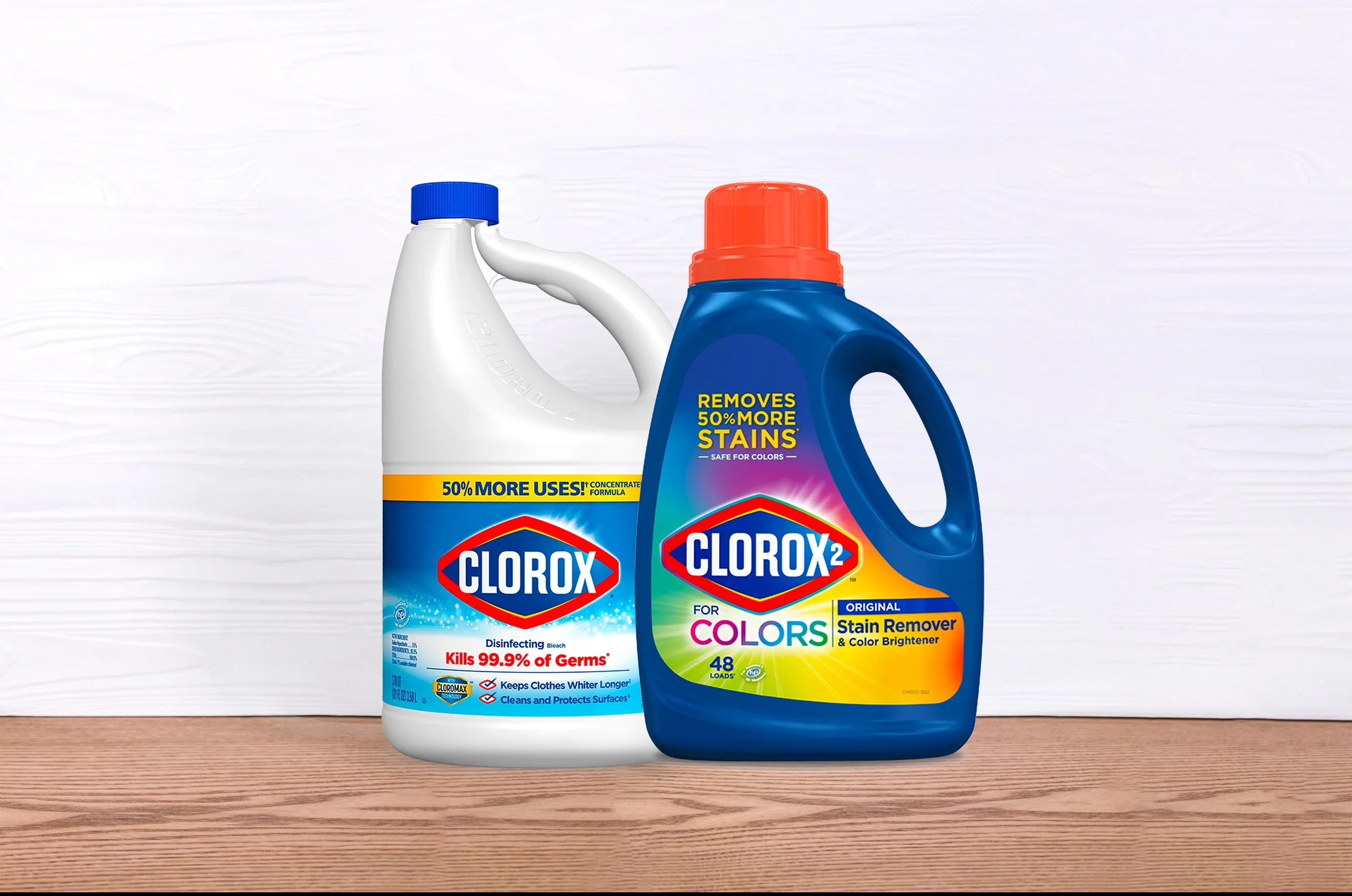
Chlorine bleach such as Clorox™ Disinfecting Bleach is powered by sodium hypochlorite, a powerful disinfectant and whitening agent. It’s ideal for white or colorfast fabrics and is especially effective for sanitizing laundry after illness or removing tough stains.
Use chlorine bleach when:
Try Clorox™ Disinfecting Bleach, the chlorine bleach trusted for generations to whiten, sanitize and deodorize surfaces and laundry.
Non-chlorine bleach, often called oxygen bleach or color-safe bleach, uses hydrogen peroxide or similar ingredients to lift stains without fading colors. It’s gentle on fabrics and safe for everyday use.
Use non-chlorine bleach when:
| Feature | Chlorine Bleach | Non-Chlorine Bleach |
|---|---|---|
| Active Ingredient | Sodium Hypochlorite | Hydrogen Peroxide, Sodium Percarbonate |
| Common Names | Regular Bleach, Clorox™ Disinfecting Bleach | Oxygen Bleach, Color-Safe Bleach, Clorox 2™ for Colors Laundry & Fabric Stain Remover |
| Best For | Whites, colorfast fabrics, sanitizing | Colors, delicates, white items with spandex |
| Whitening Power | Maximum | Moderate |
| Disinfecting Power | Yes (EPA-registered) | No |
| Fabric Safety | May damage delicates | Safe for most fabrics |
| Label Wording | "Any bleach" | "Only non-chlorine bleach" |
| Colorfastness Test | Apply diluted bleach to hidden area, wait 1 min, rinse and blot dry | Same method |
Not always. Chlorine bleach offers strong disinfecting and whitening power but may fade colors or weaken delicate fibers. Non-chlorine bleach is gentler but doesn’t disinfect. Always follow garment care labels and choose the bleach that matches your cleaning goals, like whitening, disinfecting or color-safe brightening.
For items labeled “do not bleach,” use a color-safe or oxygen-based bleach like Clorox 2™ for Colors Laundry & Fabric Stain Remover to gently brighten and freshen laundry without chlorine.
Bleach has a long history in home laundry care. Chlorine bleach (sodium hypochlorite) was first used for white cotton fabrics. Despite the name, chlorine bleach contains no elemental chlorine, just hypochlorite, which breaks down into mostly salt and water.
Later, oxygen bleaches (hydrogen peroxide, sodium perborate, sodium carbonate) were introduced. These are labeled as “non-chlorine bleach” and are ideal for white items with spandex or colored fabrics.
Look for "any bleach" or "do not bleach."
Apply diluted bleach to a hidden area.
For laundry, add ½ cup to standard machines or ¼ cup to HE machines.
Mix ⅓ cup bleach per 1 gallon water. Let stand for 6 minutes, rinse and air dry.
Important: Never mix bleach with other cleaning products. Always use in a well-ventilated area and wear gloves for prolonged use.
Apply directly and let sit for 5–10 minutes.
Dilute with water and soak for up to 60 minutes.
Use along with your regular detergent in the wash cycle.
Yes. Clorox 2™ for Colors Laundry & Fabric Stain Remover is a color-safe bleach designed to brighten and remove stains to help keep clothes looking newer longer.
No. Non-chlorine bleach is not EPA-registered for disinfection. It lifts stains and brightens but does not kill bacteria or viruses.
Yes, but it’s non-chlorine bleach. It uses oxygen-based ingredients like hydrogen peroxide to clean safely.
Chlorine bleach contains sodium hypochlorite, which is a chlorine compound, but not elemental chlorine. It’s safe when used as directed.
Color-safe bleach alternatives include oxygen-based products like Clorox 2™ for Colors Laundry & Fabric Stain Remover and Clorox Free & Clear. These are gentle on colors and delicates.
Never mix bleach with other chemicals. It can release hazardous gases. Always use bleach alone and follow label instructions.
Germicidal bleach is EPA-registered for healthcare disinfection. Regular bleach is suitable for household use and laundry sanitization.