Family of Brands

Finding cat urine or poop on your bed is frustrating, but it's a common pet accident that can be cleaned effectively with the right steps. The key is acting quickly to remove waste, treat stains at the source, and eliminate odor before it sets into bedding or mattress fibers. With proper cleaning, you can restore freshness and prevent lingering smells or repeat accidents.
Cats may urinate or defecate on beds for several reasons, and understanding the cause can help prevent future accidents. Common reasons include stress or anxiety, changes in routine, litter box issues such as cleanliness or placement or medical conditions like urinary tract discomfort.
Beds also retain strong scent markers, so if an accident has happened once, a cat may return to the same spot if odor is not fully removed. Thorough cleaning and odor elimination are important not just for hygiene, but also for preventing repeat behavior.
Rubber gloves

Paper towels or clean white cloths
Laundry detergent

Fan or open window for airflow
Carefully pick up any solid waste using gloves and paper towels and blot the area firmly to absorb as much liquid as possible.
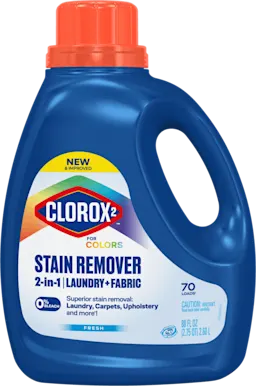
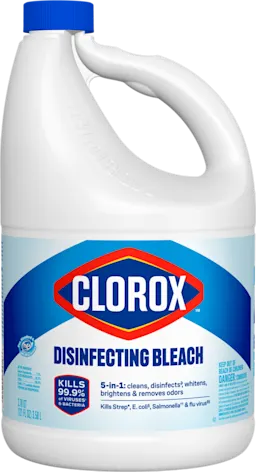
Remove all sheets, pillowcases, blankets and mattress protectors right away. Wash them as soon as possible in the hottest water safe for the fabric with detergent and Clorox Disinfecting Bleach for white, bleach-safe fabrics. For colored fabric, use Clorox 2™ for Colors Laundry & Fabric Stain Remover along with your regular detergent.
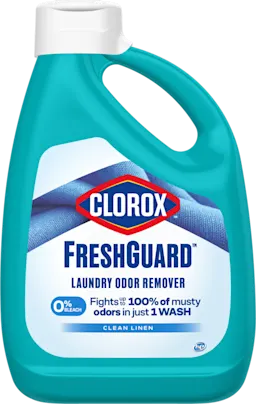
For deeper odor removal, add Clorox FreshGuard™ Laundry Odor Remover to help eliminate odor trapped in fabrics.
For soft surfaces like the mattress, pour Clorox 2™ for Colors Laundry & Fabric Stain Remover directly onto the affected area. Allow it to sit so it can penetrate and break down the urine or feces stain, then blot thoroughly with a clean, damp cloth. Repeat treatment if needed for older or deeper stains.
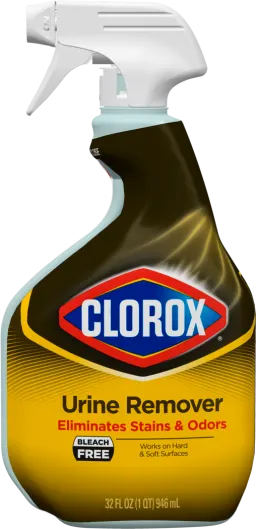
For hard surfaces that may have been affected, such as a bed frame or headboard, spray Clorox™ Urine Remover directly onto the surface and wipe clean.
Allow the mattress to air dry fully before putting any bedding back on. Use fans or open windows to improve airflow and speed up drying time. Do not remake the bed until everything is fully dry.
Bleach should not be used to clean fresh cat urine or to remove cat pee smell. Cat urine contains ammonia compounds, and mixing bleach with urine can produce hazardous gases. Instead, first blot up as much urine as possible, then apply Clorox 2™ for Colors Laundry & Fabric Stain Remover from the cap directly to the stain or apply with a clean towel until the stain is covered. Let sit for 5–10 minutes. Blot the area with a clean, damp towel to remove product residue. Test an inconspicuous area first. Do not use on fabrics that water-spot like suede, leather or silk, or on clothes while wearing. Keep kids and pets away from surface until dry.
On hard surfaces that are not bleach safe, use a urine-specific cleaner, such as Clorox™ Urine Remover, to help break down urine stains and eliminate lingering odors.
If the accident occurred on a bleach-safe, hard, nonporous surface, you can disinfect the area with Clorox™ Disinfecting Bleach only after the urine has been thoroughly removed and the surface has been rinsed, following the product label directions. This two-step approach helps remove both the cat urine stain and cat pee smell while cleaning the surface safely.
Avoid these common mistakes when cleaning pet accidents:
| Cleaner | Best for | Disinfects? | Sanitizes? |
|---|---|---|---|
| Clorox 2™ for Colors Laundry & Fabric Stain Remover | All-in-one stain fighter for laundry, upholstery, carpet, car seats, pet beds and more. | No | No |
| Clorox™ Urine Remover | Helps break down cat urine stains and eliminate urine odors on mattresses, upholstery, carpets and other hard and soft surfaces. | No | No |
| Clorox™ Disinfecting Bleach | Disinfecting bleach-safe hard, nonporous surfaces and sanitizing bleach-safe laundry after pet accidents. | Yes | Yes |
| White vinegar | Helping reduce light urine odors on some washable surfaces. | No | No |
| Baking soda | Absorbing lingering urine and poop odors after cleaning; spot treats some urine or poop stains on colorfast surfaces (test first). | No | No |
| Hydrogen peroxide (3%) | Spot treating some urine or poop stains on colorfast surfaces (test first). | Partial | Partial |
The best way to clean cat poop or urine from a mattress or bedding is to treat each surface separately. Wash white, bleach-safe bedding with detergent and Clorox™ Disinfecting Bleach to help remove stains and sanitize laundry, and spot treat mattresses with Clorox 2™ for Colors Laundry & Fabric Stain Remover according to label instructions. Spray Clorox™ Urine Remover to help eliminate urine stains and odors on hard surfaces.
The best way to neutralize cat urine is to clean it as soon as possible by blotting up the urine and treating the stain with Clorox 2™ for Colors Laundry & Fabric Stain Remover according to label instructions. For hard surfaces, you can use a urine-specific cleaner, such as Clorox™ Urine Remover, to help break down urine stains and odors. Avoid applying bleach directly to cat urine. If fresh or dried urine is present, first clean the surface with water and wipe dry before using bleach products. This helps prevent the formation of hazardous gases that may result from contact between bleach and urine residues.
If you accidentally used bleach on fresh cat urine, leave the area immediately and get fresh air, as bleach can react with ammonia compounds in urine to produce hazardous gases. Ventilate the area well, and only use bleach to disinfect bleach-safe, hard, nonporous surfaces after all urine has been cleaned away.
Some cats may be attracted to the smell of bleach because certain compounds can resemble scents found in animal urine or territorial markings. Keep cats away from treated areas until surfaces are dry and well ventilated, and never use bleach to clean fresh cat urine because it can create hazardous gases.
Clorox Disinfecting Wipes should never be used directly on cats, but they can be used to clean pet areas and messes when used according to the product label and allowed to air dry completely. For a cleaner designed for use around people and pets, consider Clorox Free & Clear Cleaning Wipes, which are suitable for use around pets when used as directed.