 Family of Brands
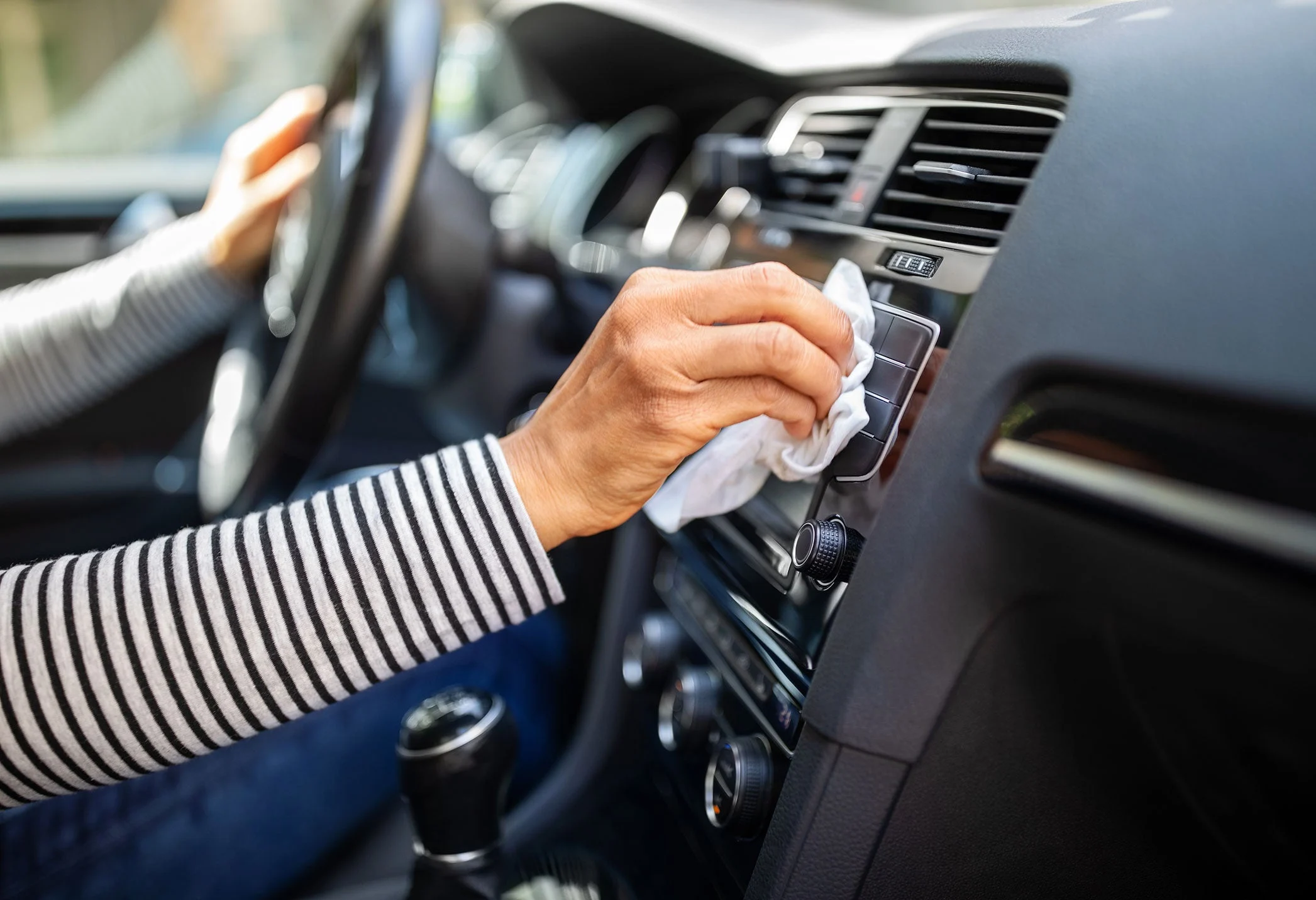
Car interiors get dirty quickly from daily use, with dust, pollen, spills and everyday contact, which can leave behind debris, stains and odors. Even if your home is clean, it's easy to overlook your car, but buildup over time can impact comfort. With the right routine, you can clean high-touch areas and keep your car interior looking and feeling fresh.
To keep the interior clean, aim for a monthly basic cleaning, like vacuuming and wiping down surfaces to keep dirt, dust and crumbs under control. High-touch areas like the steering wheel, gear shift and door handles should be cleaned more often, especially during cold and flu season. Regular cleaning not only keeps your car looking fresh but also can help protect surfaces from long-term wear and tear.
| Supply | Best for |
|---|---|
| Clorox™ Disinfecting Wipes | Cleaning and disinfecting high-touch, hard, nonporous surfaces like steering wheels, door handles, seat belt buckles and cup holders |
| Clorox™ Disinfecting All Purpose Cleaner | Dashboards, consoles, door panels and air vents (apply to a cloth, not directly to surfaces) |
| Clorox 2™ for Colors Laundry & Fabric Stain Remover | Color-safe stain and odor removal on fabric seats, carpets and floor mats |
| Microfiber cloths | Wiping surfaces and interior glass without scratching |
| Vacuum with attachments | Removing dust, crumbs and debris from seats, carpets and crevices |
Always use products as directed on the label.
Start by removing trash, empty bottles and personal belongings. Clearing everything out gives you better access to surfaces and prevents spreading dirt during cleaning.
Vacuum seats, carpets and under-seat areas to remove dust and debris. Use attachments to reach crevices and seams for a more thorough clean.
Wipe down the dashboard, console and door panels with a damp microfiber cloth and Clorox™ Disinfecting All Purpose Cleaner. For high-touch areas like the steering wheel and handles, use Clorox™ Disinfecting Wipes according to label directions.
For fabric seats, treat dirt and stains with Clorox 2™ for Colors Laundry & Fabric Stain Remover according to label directions. Gently work the product into stained or odorous areas, let sit for 5–10 minutes, then blot with a clean, damp cloth as directed. Allow seats to air dry completely. Leather and vinyl seats should be wiped gently with appropriate cleaners and dried thoroughly to maintain the material.
Remove and clean floor mats separately, rinsing rubber mats and washing carpet mats as needed. Treat dirt and stains with Clorox 2™ for Colors Laundry & Fabric Stain Remover according to label directions. Vacuum and clean interior carpets, making sure to dry thoroughly if moisture is present.
Use a streak-free cleaner and microfiber cloth to clean interior glass. Wiping evenly helps remove film and improve visibility, especially on the windshield.
Use a soft brush or cloth to remove dust from vents and tight spaces. For sanitizing vents, spray Clorox™ Disinfecting All Purpose Cleaner lightly on a cloth (not directly in vents) and wipe accessible areas. For cup holders and small compartments, use Clorox™ Disinfecting Wipes according to label directions. Keeping these areas clean helps reduce dust and bacteria circulating inside your car.
The most effective way to deodorize your car interior is to identify and remove the odor source, then clean the affected surfaces thoroughly. Car odors are typically caused by trapped moisture, spills, food debris or everyday use. Since fabrics like seats and carpets naturally hold onto smells longer than hard surfaces, addressing these areas is essential to truly eliminate the problem.
Follow these steps to deodorize your car:
Start by clearing out trash, spilled items and any debris trapped under seats or in carpet fibers.
Focus on carpets, seat upholstery and floor mats where odors linger longest. For color-safe odor and stain removal on fabric surfaces, use Clorox 2™ for Colors Laundry & Fabric Stain Remover following label directions. Work the product into the fabric and allow it to sit 5 to 10 minutes before blotting as recommended. Let surfaces air dry completely.
Spray Clorox™ PURE™ Pet Allergen Neutralizer Fabric & Carpet Spray on fabric seats and floor mats to fight pet odors and freshen soft surfaces.
Use Clorox™ Disinfecting Wipes to cut through grease and grime and leave surfaces with a gentle sparkling scent.
Open windows and run the air conditioning to allow fresh air to circulate through the cabin.
If your car interior becomes wet, drying it quickly is important to prevent odors and damage. Start by blotting excess moisture with towels, then use airflow to help speed up the drying process. Opening windows or using fans can help circulate air and remove trapped moisture. For more significant dampness, a wet/dry vacuum can help pull water from carpets and seats. Taking the time to fully dry all materials will help maintain a clean and comfortable interior.
Dust and crumbs can build up quickly on seats, carpets and in tight crevices like cup holders, seams and under seats.
Absolutely, you can use Clorox™ Disinfecting Wipes to clean many hard and soft surfaces inside your car, like the dashboard, steering wheel, door handles, car seats and seat belts. Just be careful with touchscreens and delicate surfaces and avoid using them on leather seats. If you're unsure, it's always a good idea to test on a small hidden area first.
It's likely due to heat and sun exposure breaking down the materials over time, especially in older cars. Dirt, spilled drinks or leftover cleaning products can also contribute to that tacky feel. Regular cleaning and using UV protectants can help prevent and reduce stickiness.
Dust happens. Cars tend to collect dust from outside air coming in through vents, windows and doors, especially when driving or parked outdoors. Plus, interior materials like carpets, seats and dashboards can shed tiny fibers that add to the dust buildup. Regular vacuuming, wiping surfaces, and using cabin air filters can help keep the dust at bay and your car looking clean.
To get crumbs out of your car, grab a handheld vacuum or one with a narrow nozzle attachment to reach between seats, under mats and into crevices. A soft brush or a can of compressed air can help loosen crumbs from tight spots before vacuuming. You can help keep those pesky crumbs from piling up by regularly shaking out floor mats and wiping down surfaces.
Start by cleaning high-touch surfaces like the steering wheel, door handles, dashboard and gear shift with soap and water to remove dirt. Then, use a disinfectant that's safe for automotive interiors. Wipe hard, nonporous surfaces gently and evenly with Clorox™ Disinfecting Wipes, then let the treated surface remain visibly wet for the amount of time listed on the label for disinfecting.
Disinfecting your car interior is a smart way to reduce the spread of germs, especially on high-touch surfaces. Start by wiping down all hard, nonporous surfaces—like the dashboard, steering wheel, gear shift, and cup holders — with Clorox™ Disinfecting Wipes. These areas are frequently touched and can harbor bacteria and viruses. For door interiors, be sure to clean handles, window controls and locks. Don’t forget to wipe down any door-side cup holders and the center console.
Accidents happen, and when they do, Clorox™ Urine Remover Spray or Clorox™ Pet Urine Remover Spray is your go-to solution for tackling urine messes in your car. To use, first blot up any excess liquid with a paper towel or cloth. Then spray Clorox™ Urine Remover Spray directly onto the affected area until it’s visibly wet. Let it sit for 3 minutes. Blot with a clean, damp cloth and allow the area to air dry. For deeper odors, a second application may be needed. This product is safe for use on both soft surfaces, like fabric seats and carpets, and hard surfaces.
Note: It’s always a good idea to test on a small, inconspicuous area before applying to stains to ensure surface compatibility.