 Family of Brands
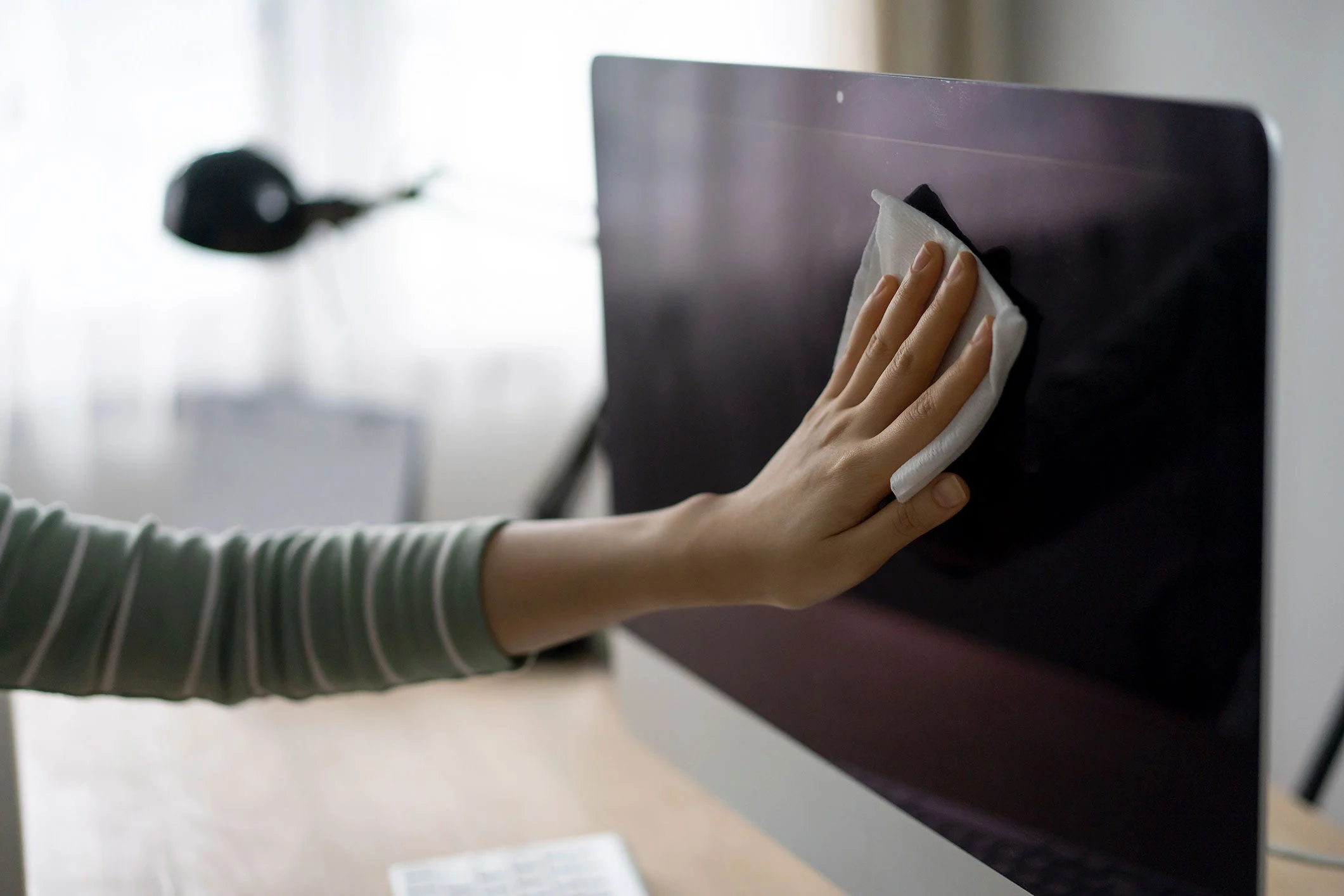
Electronics are everywhere, from TVs and laptops to desktop monitors, tablets and keyboards. Over time they collect dust, fingerprints and everyday buildup that can affect performance and appearance. Cleaning electronics properly helps keep screens clear and high-touch devices more hygienic, and this guide shows how to safely clean and disinfect a range of electronics, including TV screens, computer screens, laptop displays, touch screens and keyboards.
How often you clean electronics depends on usage and environment. For most home electronics, cleaning once a week helps remove dust, fingerprints and everyday buildup. Shared or high-touch electronics like laptops, tablets and keyboards in offices or classrooms may need more frequent attention. During cold and flu season or periods of heavy use, increasing cleaning and disinfecting of electronics can help maintain a more hygienic surface.
Having the right supplies on hand makes cleaning electronics simple and safe. Here's what to keep nearby:
| Supply | Best for |
|---|---|
| Clorox™ Disinfecting Wipes | Cleaning and disinfecting hard, nonporous surfaces like keyboards, trackpads, monitor frames and device casings |
| Microfiber cloth | Gently cleaning screens, displays and coated surfaces without scratching |
| Distilled water (optional) | Lightly dampening a microfiber cloth for screen cleaning when wipes are not manufacturer-approved |
Turn off and unplug the TV before cleaning. Allow the screen to cool if it has recently been in use.
Use a Clorox™ Disinfecting Wipe to clean the TV frame, stand and surrounding plastic components. These exterior surfaces are hard and nonporous, making them ideal for Clorox™ Disinfecting Wipes. Always follow manufacturer instructions.
Use a dry microfiber cloth to gently remove dust and smudges from the screen. Start in the center and wipe outward using light, circular motions. If a damp cloth is needed, lightly dampen it with distilled water and wipe gently. TV screens can be delicate, so always check manufacturer instructions before applying any moisture or product.
If the screen has been exposed to heavy grime or illness, you may disinfect it with a Clorox™ Disinfecting Wipes. Always check manufacturer instructions first. Wipe the screen until visibly wet, then allow it to air dry completely.
Clorox™ Disinfecting Wipes are intended for disinfection, not for smudge or fingerprint removal on screens. For everyday dust and fingerprints, use a dry microfiber cloth.
Let the TV screen dry completely before plugging the device back in.
Turn off and unplug the laptop. Disconnect accessories and remove the battery if your model allows it. Always follow manufacturer instructions for cleaning and disinfecting electronics.
Use a Clorox™ Disinfecting Wipe to clean the laptop casing, trackpad and keyboard exterior. These hard, nonporous surfaces are where oils and germs build up the most. Focus on high-touch areas including the trackpad, palm rest, hinges and keyboard keys.
Use a dry microfiber cloth to gently remove dust and smudges from the screen. Start in the center and wipe outward using light, circular motions. If a damp cloth is needed, lightly dampen it with distilled water. Laptop screens have protective coatings, so follow your manufacturer's instructions before applying any cleaning product.
When the screen has been exposed to heavy grime or illness, you may disinfect it with a Clorox™ Disinfecting Wipe. Always check manufacturer instructions first. Wipe the screen until visibly wet and allow it to air dry before closing the lid.
Clorox™ Disinfecting Wipes are intended for disinfection, not for smudge or fingerprint removal on screens. For everyday dust and fingerprints, use a dry microfiber cloth.
Let the laptop screen dry completely before reattaching the battery or plugging in the device.
Turn off and unplug the computer or monitor before cleaning. Disconnect peripherals such as keyboard and mouse.
Use Clorox™ Disinfecting Wipes to clean the monitor frame, stand and surrounding plastic components. The frame and stand are hard, nonporous surfaces and ideal candidates for Clorox™ Disinfecting Wipes. Always follow manufacturer instructions.
Use a dry microfiber cloth to gently remove dust and smudges from the screen. Start in the center and wipe outward using light, circular motions. If a damp cloth is needed, lightly dampen it with distilled water. Always check manufacturer instructions before applying any product directly to the screen.
If the screen has been exposed to heavy use, grime or illness, you may disinfect it with a Clorox™ Disinfecting Wipe. Always check manufacturer instructions first. Wipe the screen until visibly wet, then allow to air dry completely.
Clorox™ Disinfecting Wipes are intended for disinfection, not for smudge or fingerprint removal on screens. For everyday dust and fingerprints, use a dry microfiber cloth.
Let the screen dry completely before plugging the device back in.
Turn off the device completely before cleaning.
Use a Clorox™ Disinfecting Wipe to clean the device case, cover and surrounding plastic components. Tablets are high-touch devices passed between hands frequently, making regular disinfection of hard surfaces especially worthwhile. Always follow manufacturer instructions.
Use a dry microfiber cloth to gently remove dust and smudges from the screen. Start in the center and wipe outward using light, circular motions. If a damp cloth is needed, lightly dampen it with distilled water.
Because tablets are high-touch devices, disinfecting the screen with a Clorox™ Disinfecting Wipe is a good idea after heavy use or illness exposure. Always check manufacturer instructions first. Wipe the screen until visibly wet and allow it to air dry completely.
Clorox™ Disinfecting Wipes are intended for disinfection, not for smudge or fingerprint removal on screens. For everyday dust and fingerprints, use a dry microfiber cloth.
Let the screen dry completely before turning the device back on.
Turn off and unplug the keyboard. Remove batteries from wireless keyboards when applicable.
Use a Clorox™ Disinfecting Wipe to remove visible crumbs, debris and surface grime from the keys and keyboard body. Tilt the keyboard gently to dislodge particles between keys. Pay special attention to the keys, spacebar and exterior surfaces. Allow to dry briefly before the disinfection step.
To disinfect, wipe the keyboard surfaces with Clorox™ Disinfecting Wipes until visibly wet. Surfaces must remain wet for the contact time listed on the product label before air drying. This wet contact time is essential for the disinfectant to work effectively. Always follow manufacturer instructions for cleaning and disinfecting electronics.
Before cleaning screens or electronic devices, it’s important to use the right method to avoid damage, streaks, or moisture issues. Follow these simple do's and don'ts to help ensure a safe and effective clean every time.
| Do | Don't |
|---|---|
| Power down devices before cleaning | Clean screens while devices are powered on |
| Wipe gently using light pressure | Scrub or press hard on screens |
| Clean with manufacturer-approved methods | Ignore manufacturer cleaning instructions |
| Focus on high-touch areas like keyboard and trackpad | Let moisture seep into ports or between keys |
| Allow devices to fully air dry before powering on | Reconnect power or use devices while still damp |
Always follow manufacturer instructions for cleaning and disinfecting electronics. Clorox™ Disinfecting Wipes are intended for use on hard, nonporous surfaces. TV screens can be delicate, so check your TV manufacturer's instructions before applying any product directly to the screen. When screen disinfection is needed due to heavy grime or illness exposure, Clorox™ Disinfecting Wipes can be used if the manufacturer approves. For everyday dust and fingerprints, use a dry microfiber cloth.
We don’t recommend using regular glass cleaner on a monitor as it can damage the screen's protective coating. Some eyeglass cleaners may be safe for a laptop screen if they are free of ammonia and harsh chemicals — always check the label first and follow your device’s guidelines.
Clorox™ Disinfecting Wipes are a great choice for cleaning and disinfecting the hard, nonporous exterior of a computer or laptop, including the casing, frame and keyboard. For the screen itself, always check your manufacturer's instructions first. For everyday dust or fingerprints on the screen, a dry microfiber cloth is best. When you need to disinfect the screen after heavy grime or illness exposure, Clorox™ Disinfecting Wipes can be used if the manufacturer approves.
Turn off and unplug the device. Disconnect accessories and remove batteries if possible. Always follow manufacturer instructions for cleaning and disinfecting electronics. Use a dry microfiber cloth to gently wipe the screen, starting at the center and working outward in light, circular motions. If additional cleaning is needed, lightly dampen the cloth with distilled water. For the hard, nonporous exterior surfaces, use Clorox™ Disinfecting Wipes. When the screen needs disinfection, use Clorox™ Disinfecting Wipes per manufacturer instructions and allow to air dry completely.
Power down the device. Disconnect accessories and remove batteries if present. Always follow manufacturer instructions for cleaning and disinfecting electronics. Use a Clorox™ Disinfecting Wipe to clean and disinfect the hard, nonporous exterior surfaces such as the casing, frame and keyboard. When screen disinfection is needed, wipe the screen with a Clorox™ Disinfecting Wipe until visibly wet and allow it to air dry before use, per manufacturer instructions.
Note: Clorox™ Disinfecting Wipes are intended for disinfection, not for smudge or fingerprint removal on screens.