Family of Brands
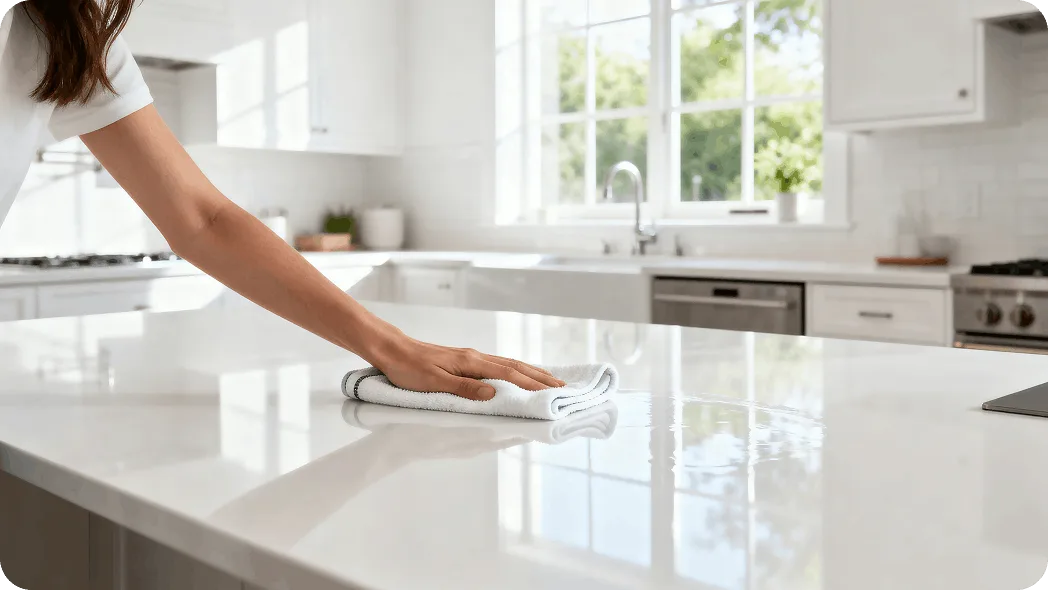
Learn how to clean and disinfect kitchen countertops using Clorox™ products. Step-by-step guidance for removing stains, deep cleaning, and disinfecting surfaces.
Keeping kitchen countertops clean can be a challenge with daily spills, stubborn stains, and germs that hide in hard-to-reach spots. Clorox has options — both bleach and bleach-free — for effective solutions that disinfect surfaces and tackle tough messes. In this guide, you’ll learn how to clean your countertops thoroughly, remove stains, and maintain a fresh, hygienic workspace with practical tips for every cleaning session.
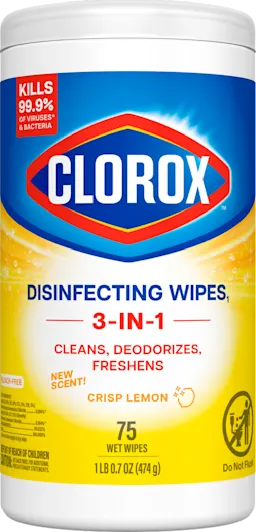
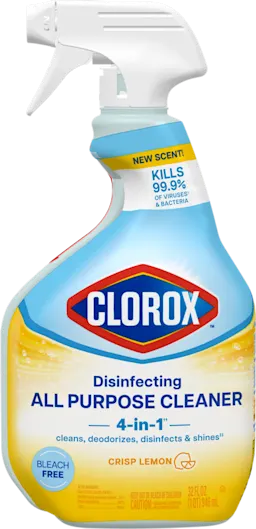
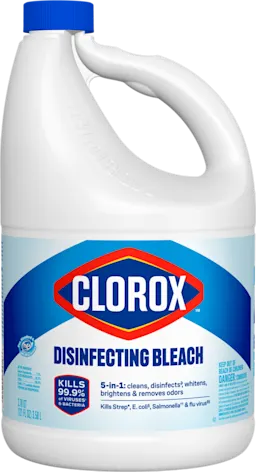
Kitchen countertops should be cleaned daily to remove crumbs, spills, and germs that accumulate during food preparation. Regular cleaning with Clorox™ Disinfecting Wipes helps prevent odor-causing bacteria buildup, helps reduce the risk of cross-contamination, and keeps surfaces looking their best. For deep disinfecting, using Clorox™ Disinfecting All Purpose Cleaner or a properly diluted Clorox™ Disinfecting Bleach solution helps ensure countertops stay hygienic and safe for food prep.

Soft cloths or microfiber towels

Non-scratch sponges

Measuring spoon + spray bottle
Clorox™ Disinfecting Wipes and Clorox™ Disinfecting All Purpose Cleaner are safe to use on the following kitchen countertops:
| Surface type | Safe for Clorox™ Disinfecting Wipes? | Safe for Clorox™ Disinfecting All Purpose Cleaner? | What to avoid |
|---|---|---|---|
| Sealed granite | Yes | Yes | Vinegar, lemon, acidic or abrasive cleaners |
| Sealed quartz | Yes | No | Vinegar, lemon, acidic or abrasive cleaners |
| Marble | Yes (sealed or synthetic) | Yes (synthetic) | Bleach, vinegar, hydrogen peroxide |
| Laminate | Yes | Yes | Abrasive pads, scouring powders |
| Wood (finished) | Yes | Yes | Excess moisture, abrasive tools |
| Butcher block (sealed) | Yes | Yes | Harsh chemicals, soaking |
Be sure to check with your countertop manufacturer for specific guidance.
Sealed stone countertops are long-lasting and beautiful, but they require the right cleaning routine to protect their finish. For everyday care, wipe the surface with Clorox™ Disinfecting Wipes to remove spills and residue without harsh scrubbing. To deep clean countertops, use a properly diluted bleach solution only where appropriate and rinse thoroughly afterward to maintain the stone’s appearance and seal.
Laminate countertops are durable and easy to maintain with everyday use. For daily care and disinfection, clean the surface with Clorox™ Disinfecting Wipes or Clorox™ Disinfecting All Purpose Cleaner to kill germs and quickly remove spills, crumbs, and residue. For a deeper clean and disinfection on plastic laminate, use a properly diluted Clorox™ Disinfecting Bleach solution, ensuring the surface is rinsed and dried after application. Regular cleaning and quick action on stains help keep laminated countertops looking fresh and hygienic.
Clorox™ Disinfecting Wipes or Clorox™ Disinfecting All Purpose Cleaner are a convenient daily solution for stainless steel countertops, helping lift spills, fingerprints, and bacteria without the need for mixing or rinsing. Wipe with the direction of the grain and dry with a microfiber cloth for best results. Learn more in our How to Clean Stainless Steel article.
Use Clorox™ Disinfecting Wipes for gentle care and maintenance on sealed butcher block. If the surface requires a deeper clean, use Clorox™ Disinfecting All Purpose Cleaner or a diluted bleach solution to help disinfect it while preventing odor-causing bacteria growth. With either product, a potable rinse is required if the butcher block is a food-contact surface. Make sure to avoid over-saturating the wood. Regular cleaning, followed by drying and occasional oiling, keeps the wood healthy and prevents cracks or warping.
The sooner you address a stain, the less likely it is to cause discoloration or lingering marks.
Wipe away crumbs, residue, or loose debris so the cleaner can work directly on the stain.
Use Clorox™ Disinfecting Wipes or Clorox™ Disinfecting All Purpose Cleaner for everyday cleans, and mix a diluted Clorox™ Disinfecting Bleach solution for deep cleaning on many sealed surfaces.
Allowing the product to rest for a few minutes helps lift deeper or more stubborn stains. For Clorox™ Disinfecting Bleach, mix 1/3 cup with one gallon of water and allow to sit for 6 minutes.
Use a soft cloth or nonabrasive sponge to avoid damaging the finish.
Remove any remaining cleaner and moisture to prevent streaking or water spots.
Prompt cleanup and routine care keep countertops clean, bright, and free of buildup or staining over time.
Most common countertop materials are made to be durable, but they still need the right care to stay protected and looking their best. Harsh cleaners, abrasive scrubbing pads, and acidic ingredients like vinegar or lemon juice can break down the protective sealant and dull the surface over time, while letting spills — especially oils or deeply pigmented liquids—sit too long can lead to staining. Before choosing a DIY cleaner for your counters, it’s important to understand which ingredients are safe and effective. Some DIY solutions can handle light residue, but most won’t sanitize or tackle tougher messes. The chart below breaks down common DIY cleaning ingredients and explains what they can—and can’t—do for your countertops.
| Cleaner | Recommendation | Can be used on sealed granite? | Can be used on sealed or synthetic marble? | Can be used on quartz? |
|---|---|---|---|---|
| Clorox™ Disinfecting Wipes | Easy everyday messes removal, disinfecting high-touch surfaces | ✓ | ✓ | ✓ |
| Clorox™ Disinfecting All-Purpose Cleaner | Easy grease and grime removal, tackets set-in messes | ✓ | ✓ | X |
| Clorox™ Disinfecting Bleach | Deep cleaning bathroom surfaces, removing tough stains on whites/ laundry | ✓ | X | X |
| Vinegar | Acidic; effective on light residue | X | X | X |
| Hydrogen peroxide (3%) | Mild disinfectant; may dull finish over time | X | X | X |
| Isopropyl alcohol (70%) | Helps with routine sanitizing but less comprehensive than bleach | ✓ | X | X |
| Dish soap & water | Safe for daily cleaning; does not disinfect | ✓ | ✓ | ✓ |
| Lemon juice | Acidic; can damage or dull surfaces; only suitable for spot cleaning | X | X | X |
| Baking soda | For mild stains; does not disinfect, time-consuming application | ✓ | ✓ | ✓ |
Clorox™ Disinfecting Wipes can be used on many sealed, hard, nonporous surfaces such as sealed granite, sealed quartz, laminate, finished wood and sealed butcher block. However, because counters often double as food prep surfaces, always follow with a potable water rinse. Avoid use on unsealed wood and food contact appliance interiors, and always follow label instructions.
Clorox™ Disinfecting All Purpose Cleaner is safe for many hard, nonporous surfaces like laminate, sealed granite and synthetic marble when used as directed — but not for unsealed natural stone, as it is not pH neutral. On any surface used for food preparation, follow with a potable water rinse.
Properly diluted Clorox™ Disinfecting Bleach can be used on many sealed, nonporous, bleach-safe surfaces. For natural stone, always follow the countertop manufacturer’s guidance, as some sealed granite surfaces may tolerate bleach, while others cannot. Use only EPA-registered bleach products for food-contact sanitizing and follow the required wash, rinse, sanitize, air dry sequence.
For glazed tile or ceramic, use Clorox™ Disinfecting Wipes or Clorox™ Disinfecting All Purpose Cleaner, then rinse if you’ll be preparing food on the surface. For natural stone tile (such as marble tile), avoid acidic cleaners completely and stick to gentle, manufacturer approved cleaners.