Family of Brands
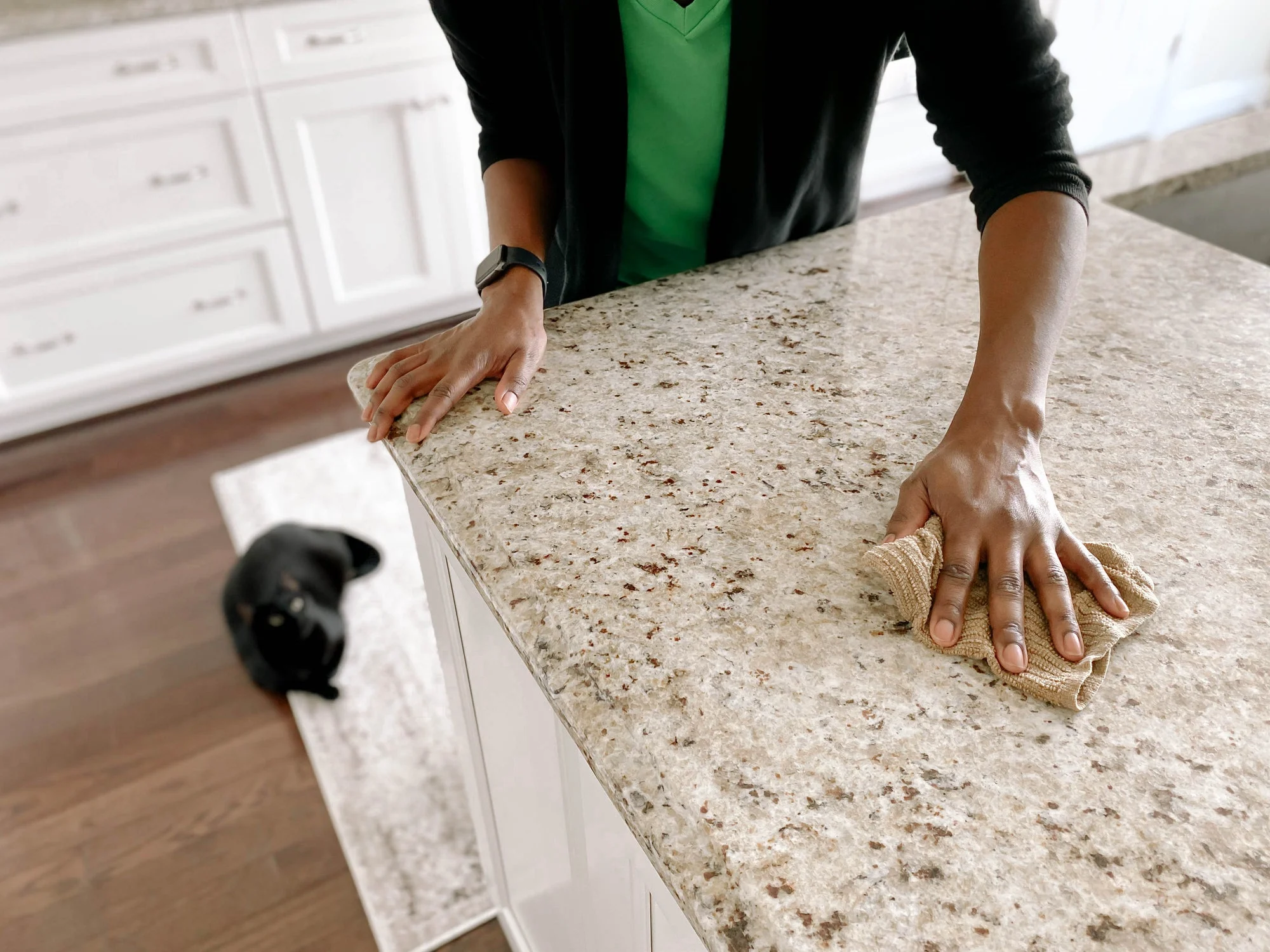
Learn how to safely clean granite countertops using Clorox™ products. Step-by-step tips for everyday messes, stains and disinfecting.
Keeping sealed granite countertops sparkling and disinfected can be tricky because while their natural stone surface is beautiful, it requires careful cleaning to avoid damage. But with Clorox™ Disinfecting Bleach and bleach-free alternatives like Clorox™ Disinfecting Wipes and Clorox™ Disinfecting All Purpose Cleaner, you can use this step-by-step guide to learn key tips for safely cleaning granite and protecting your countertops while keeping them spotless.
For most homes, a simple daily wipe-down to remove crumbs, spills, and everyday residue is enough to keep sealed granite in great shape. A quick wipe after cooking or food prep helps prevent buildup and keeps the surface looking polished.
Plan on disinfecting sealed granite occasionally, such as after handling raw meat, during heavy kitchen use, or when you want a deeper clean. When needed, a properly diluted Clorox™ Disinfecting Bleach solution can be used on sealed, bleach‑safe granite to disinfect and lift surface‑level buildup. Regular daily cleaning, paired with periodic disinfecting, helps keep granite countertops smooth, clean and well-maintained.
Yes. A properly diluted bleach solution can be used safely on sealed granite countertops as an EPA-registered disinfectant for hard, nonporous surfaces when used as directed. You can also use Clorox™ Clean‑Up™ Multi-Surface Cleaner + Bleach on sealed granite to tackle tough messes and help lift surface stains — always following label directions.
Be sure the surface is sealed, follow proper dilution instructions, and rinse thoroughly after use. Avoid using bleach on unsealed, damaged or highly worn granite.

Soft cloths or microfiber towels

Non-scratch sponges

Measuring spoon + spray bottle
Step-by-step daily cleaning routine:
Remove crumbs and surface debris with a damp microfiber cloth.
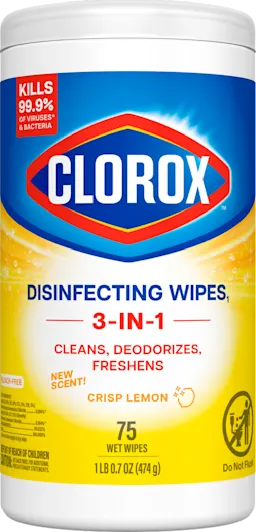
Wipe down sealed surface with Clorox™ Disinfecting Wipes.
Ensure the surface remains visibly wet for 10 seconds (sanitizing) to 4 minutes (disinfecting).
Rinse with potable water if food contact is expected.
Let air dry.
Periodic disinfecting & deep cleaning:
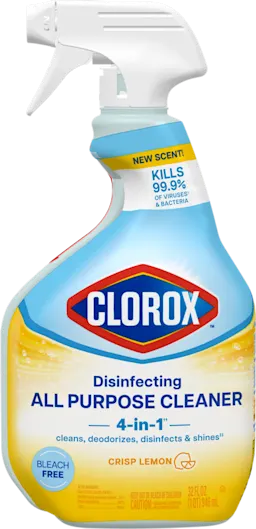
Spray Clorox™ Disinfecting All Purpose Cleaner 6–8 inches from surface until thoroughly wet.
Let stand for 30 seconds (sanitizing) to 10 minutes (disinfecting).
Rinse or wipe clean. For visibly soiled areas, a precleaning is required.
To remove stains from granite, start by identifying the source — common culprits include water marks or rings, rust, soap residue, oil, vinegar and coffee. Most everyday stains can be lifted with a [Clorox™ Disinfecting Wipe](/products/clorox-disinfecting-wipes/, while oil-based spots may require Clorox™ Clean-Up™ Multi-Surface Cleaner + Bleach. For rust or stubborn mineral deposits, use a nonabrasive cleaner formulated for stone surfaces to help restore the granite’s natural appearance without damaging the finish.
For everyday stains:
For oil-based stains:
For mineral deposits or rust:
To keep sealed granite countertops looking their best, clean routinely with gentle wipes like Clorox™ Disinfecting Wipes or Clorox™ Disinfecting All Purpose Cleaner to remove residue from everyday messes. This helps maintain a clean, fresh surface without the need for harsh scrubbing. For added shine, occasionally buff the granite with a soft microfiber cloth to enhance its natural finish, no additional polish required.
Sealed granite countertops are durable, but they still need the right care to stay protected and looking their best. Harsh cleaners, abrasive scrubbing pads, and acidic ingredients like vinegar or lemon juice can break down the protective sealant and dull the surface over time, while letting spills —especially oils or deeply pigmented liquids — sit too long can lead to staining. Before choosing a DIY cleaner for granite, it’s important to understand which ingredients are safe and effective. Some DIY solutions can handle light residue, but most won’t sanitize or tackle tougher messes. The chart below breaks down common DIY cleaning ingredients and explains what they can — and can’t — do for granite countertops.
| Cleaner | Recommendation | Can be used on sealed granite? | Can be used on sealed or synthetic marble? | Can be used on quartz? |
|---|---|---|---|---|
| Clorox™ Disinfecting Wipes | Easy everyday messes removal, disinfecting high-touch surfaces | ✓ | ✓ | ✓ |
| Clorox™ Disinfecting All-Purpose Cleaner | Easy grease and grime removal, tackets set-in messes | ✓ | ✓ | X |
| Clorox™ Disinfecting Bleach | Deep cleaning bathroom surfaces, removing tough stains on whites/ laundry | ✓ | X | X |
| Vinegar | Acidic; effective on light residue | X | X | X |
| Hydrogen peroxide (3%) | Mild disinfectant; may dull finish over time | X | X | X |
| Isopropyl alcohol (70%) | Helps with routine sanitizing but less comprehensive than bleach | ✓ | X | X |
| Dish soap & water | Safe for daily cleaning; does not disinfect | ✓ | ✓ | ✓ |
| Lemon juice | Acidic; can damage or dull surfaces; only suitable for spot cleaning | X | X | X |
| Baking soda | For mild stains; does not disinfect, time consuming application | ✓ | ✓ | ✓ |
Yes — Clorox™ Disinfecting Wipes can be used on sealed granite surfaces. They provide a convenient way to remove everyday messes and kill germs without damaging the stone’s protective finish. Be sure to rinse with potable water afterward if food will come into contact with the surface.
Yes — Clorox™ Disinfecting All Purpose Cleaner is safe for sealed granite and helps lift dirt, spills and grease without scratchy abrasives. Use as part of a regular maintenance routine, then rinse with water when used on any food-prep area. Avoid use on unsealed or deteriorating granite.
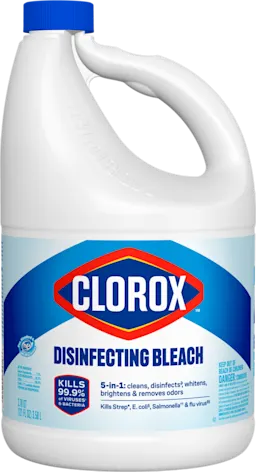
Yes — diluted bleach is safe for sealed granite and is one of the most effective ways to deep clean and disinfect countertops. It should not be used on unsealed or damaged stone, as the bleach may penetrate the surface. Proper dilution, a brief contact time and a rinse afterward ensure safe and effective use.
Granite is more stain resistant than other natural stones, but it can still absorb oils, pigments or standing water over time. Water rings, coffee drips and oil splatters can leave marks if left for too long. Quick cleanup and routine sealing reduce the chance of stains forming.
No — vinegar is acidic and can break down the granite sealant, leading to dull spots and long-term damage. Even diluted vinegar should be avoided. Choose a pH-neutral cleaner or dish soap/water mixture instead.
Acetone can be used sparingly on sealed granite to remove sticky residue or tough marks — especially on dark granite — but should be applied carefully. Alternatively, you can use EPA-registered products like Clorox Disinfecting Bleach to tackle stubborn stains.
The most effective way to disinfect sealed granite is to use a diluted bleach solution or Clorox™ Disinfecting Wipes, followed by a rinse when food contact is possible. For routine sanitizing, isopropyl alcohol can also be used but is less comprehensive. Always start with a clean surface, then apply a disinfectant for the recommended contact time.
Granite is porous, but far less so than marble. Its pore structure is protected by a sealant that helps prevent liquids from absorbing. Regular sealing helps block stains, germs and moisture from penetrating the surface.
Most granite countertops benefit from sealing once a year, though high-use kitchens may need sealing every 6–12 months. Test by sprinkling a few drops of water on the surface — if the water absorbs within minutes, it’s time to reseal. Keeping the surface sealed enhances durability and stain resistance.
Granite floors should be swept or dust mopped daily to prevent grit from scratching. Clean with warm water and mild dish soap using a damp (not soaking) mop. Avoid acidic or abrasive cleaners that may weaken the finish.