 Family of Brands
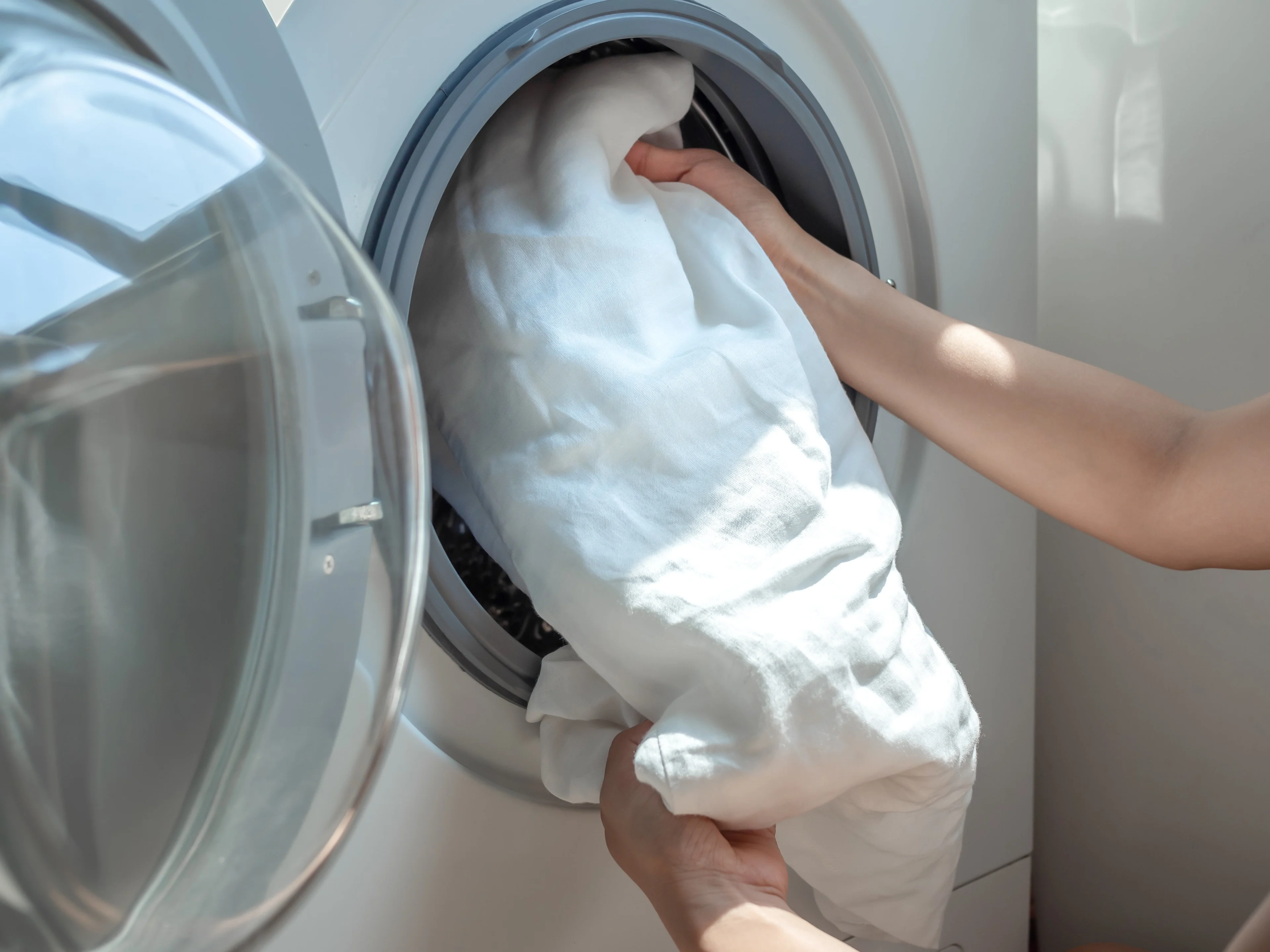
You can add bleach to every load of bleach-safe laundry along with your regular detergent to clean, whiten, remove stains and sanitize your clothes. Detergent alone is not enough.
Clorox™ Disinfecting Bleach keeps white clothes their whitest and kills 99.9% of germs in your laundry. It works better than detergent alone on hard-to-remove stains including berries, juice, mud/dirt, ketchup, grass, coffee, red wine and tea.
While they are sometimes referred to as “chlorine bleach,” there is no elemental or free chlorine in our bleach products. The sodium hypochlorite bleach active in Clorox™ Disinfecting Bleach oxidizes soils and stains, and in the process breaks down almost entirely into salt and water. This makes it quite environmentally friendly. Since it’s even effective in cold water, you can save energy and still get great laundry results compared to detergent alone.
Remember to always check care labels to confirm fiber content before washing; avoid bleaching wool, silk, mohair, leather, spandex and non-fast colors.
| Objective | Standard Washing Machine | High Efficiency Washing Machine |
|---|---|---|
| Sanitization | 1/2 cup | 1/4 cup |
| Whitening and Stain Removal (Normal Soil) | 1/3 cup | Max line in dispenser |
| Whitening and Stain Removal (Heavy Soil) | 2/3 cup | Max line in dispenser |
Before you begin, always check care labels to confirm fiber content before washing; avoid bleaching wool, silk, mohair, leather, spandex and non-fast colors. Also, test for colorfastness to ensure the fabric doesn’t become discolored.
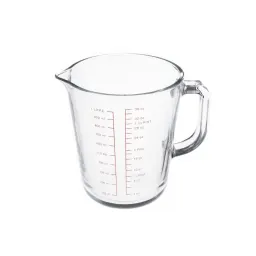
Measuring cup
Select bleach-safe fabrics that are white or colorfast.
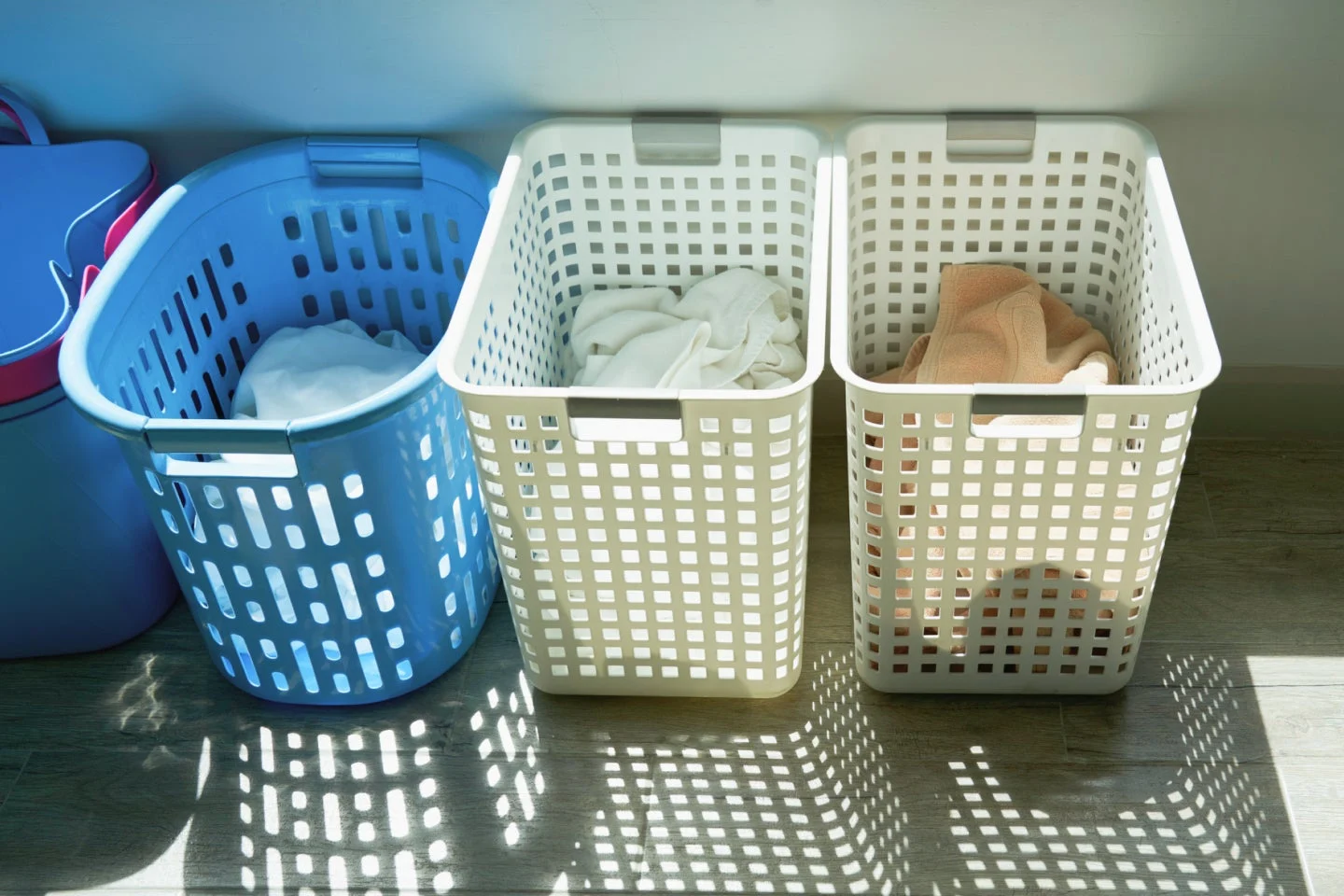
A heavy-duty cycle with hot water and an extra rinse will give you the best performance.

The empty washer will begin filling with water. When the washer is about half full with water, add detergent and bleach.
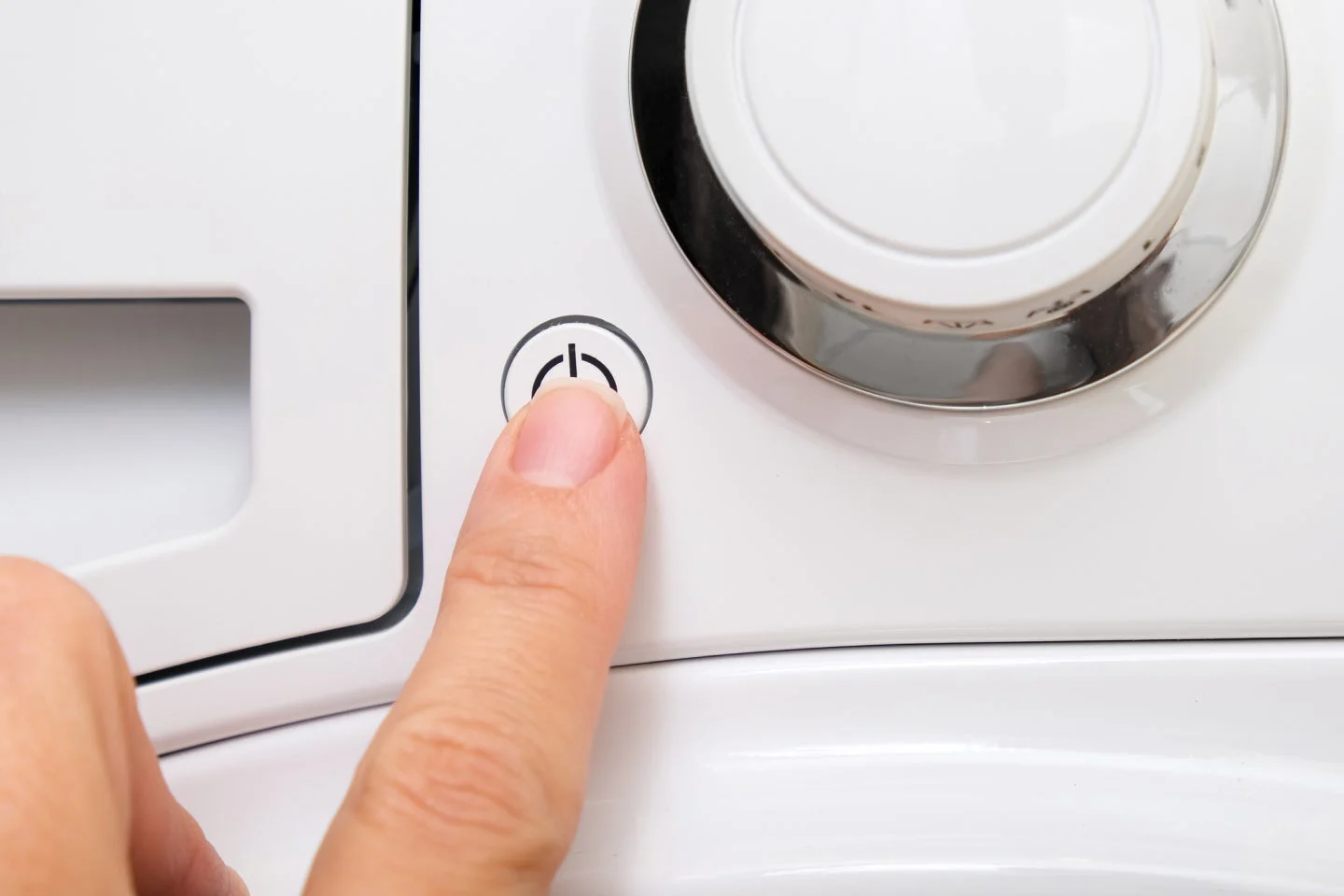
Don’t overload the washer; clothing should circulate easily through the water.
Select bleach-safe fabrics that are white or colorfast.
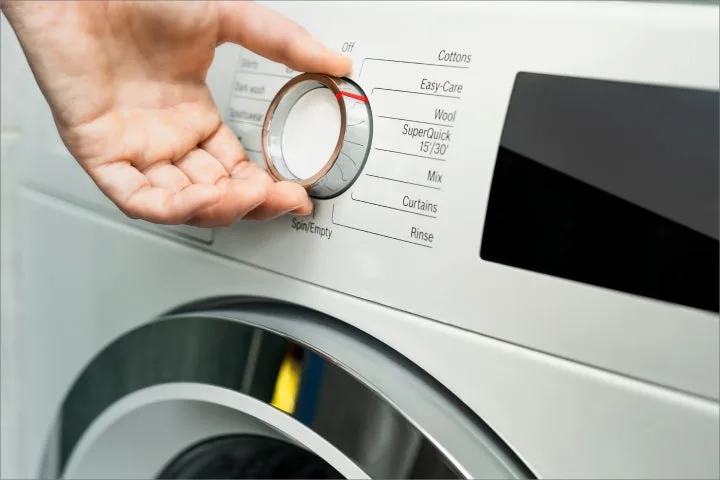
A heavy-duty cycle with hot water and an extra rinse will give you the best performance.
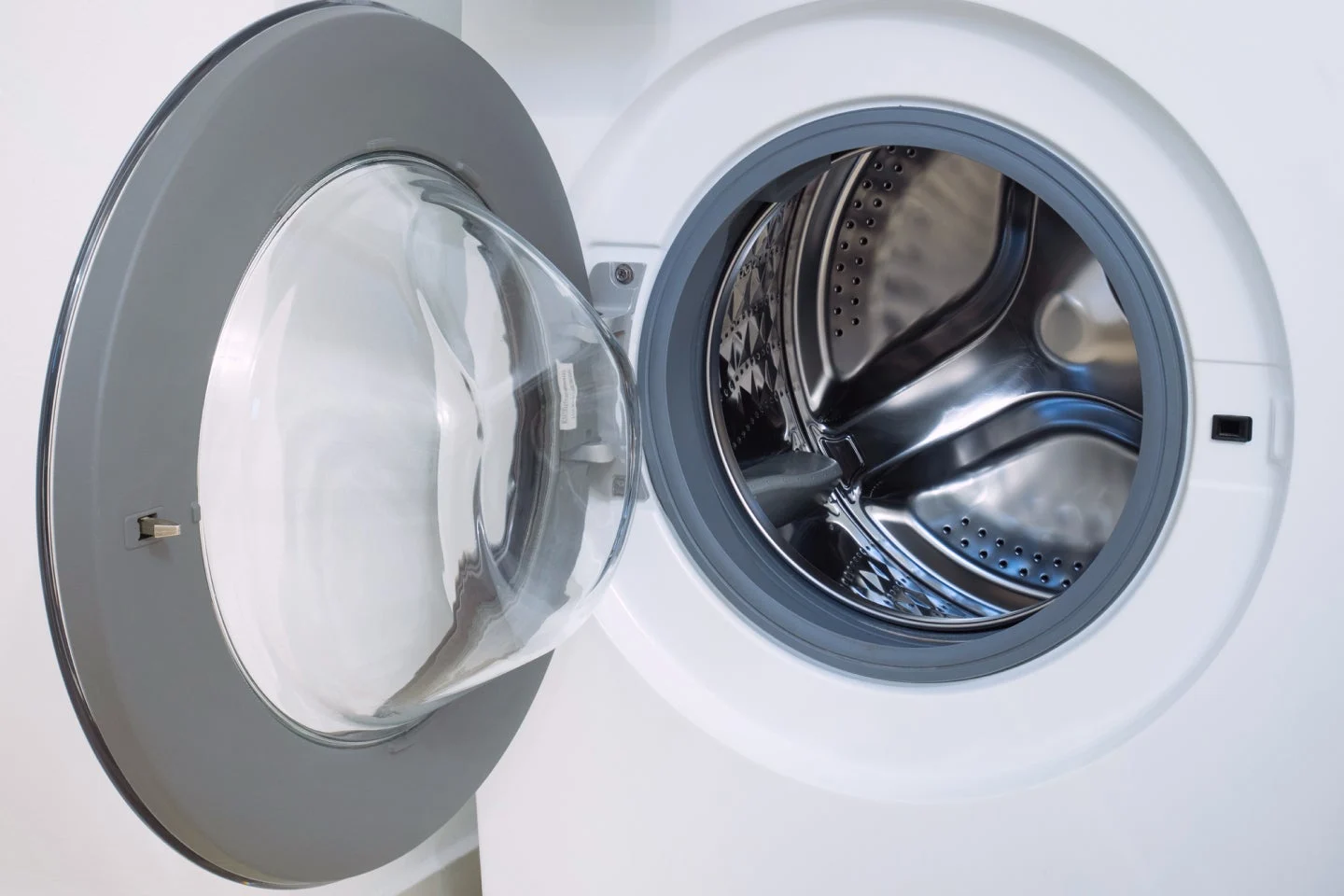
Add clothing loosely. Avoid packing laundry as this will overload the washer. Items should have room to tumble freely through the wash water.
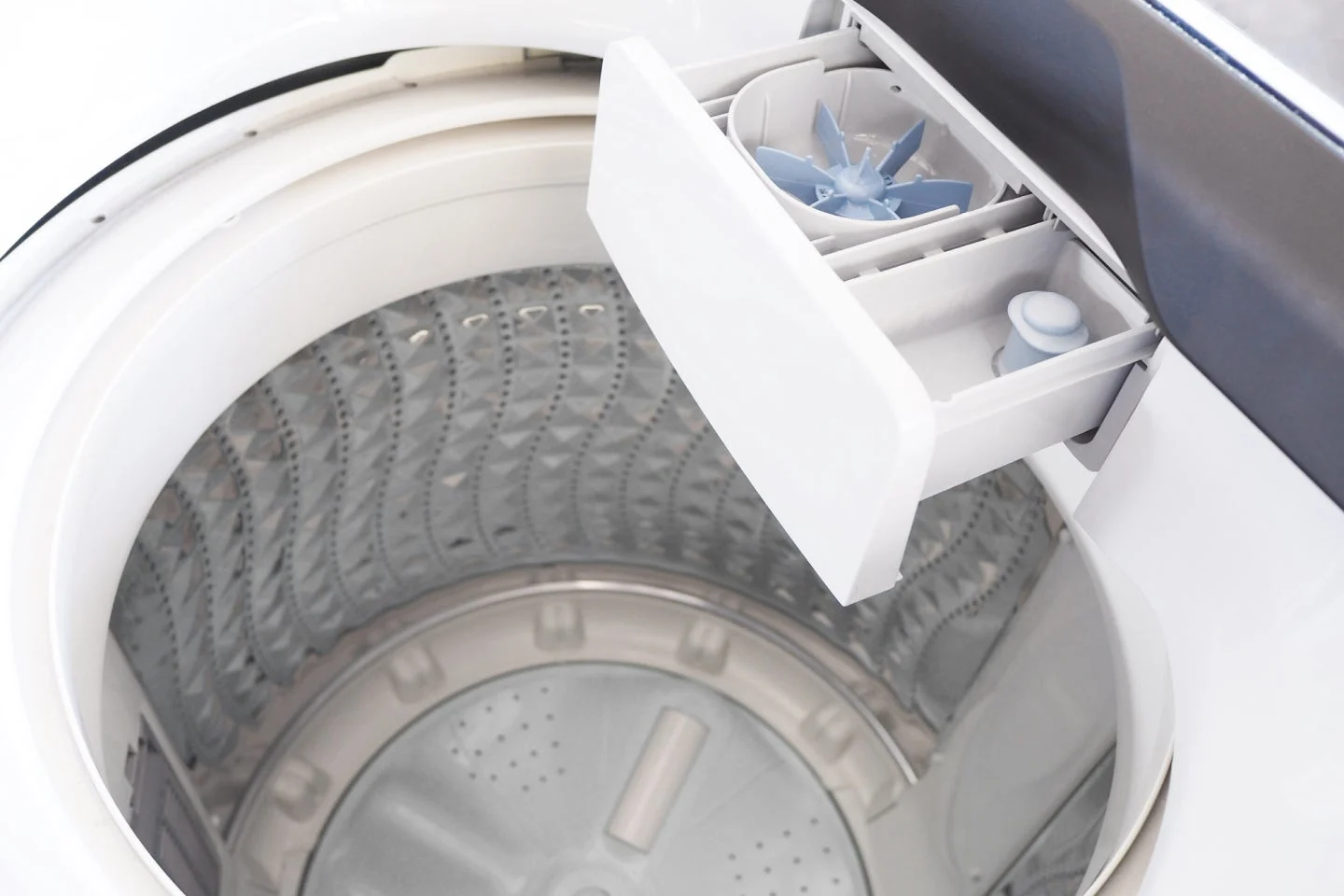
Add bleach and detergent to appropriate dispenser compartments. These are usually labeled on the dispensers, but you can also check the user’s guide for directions.
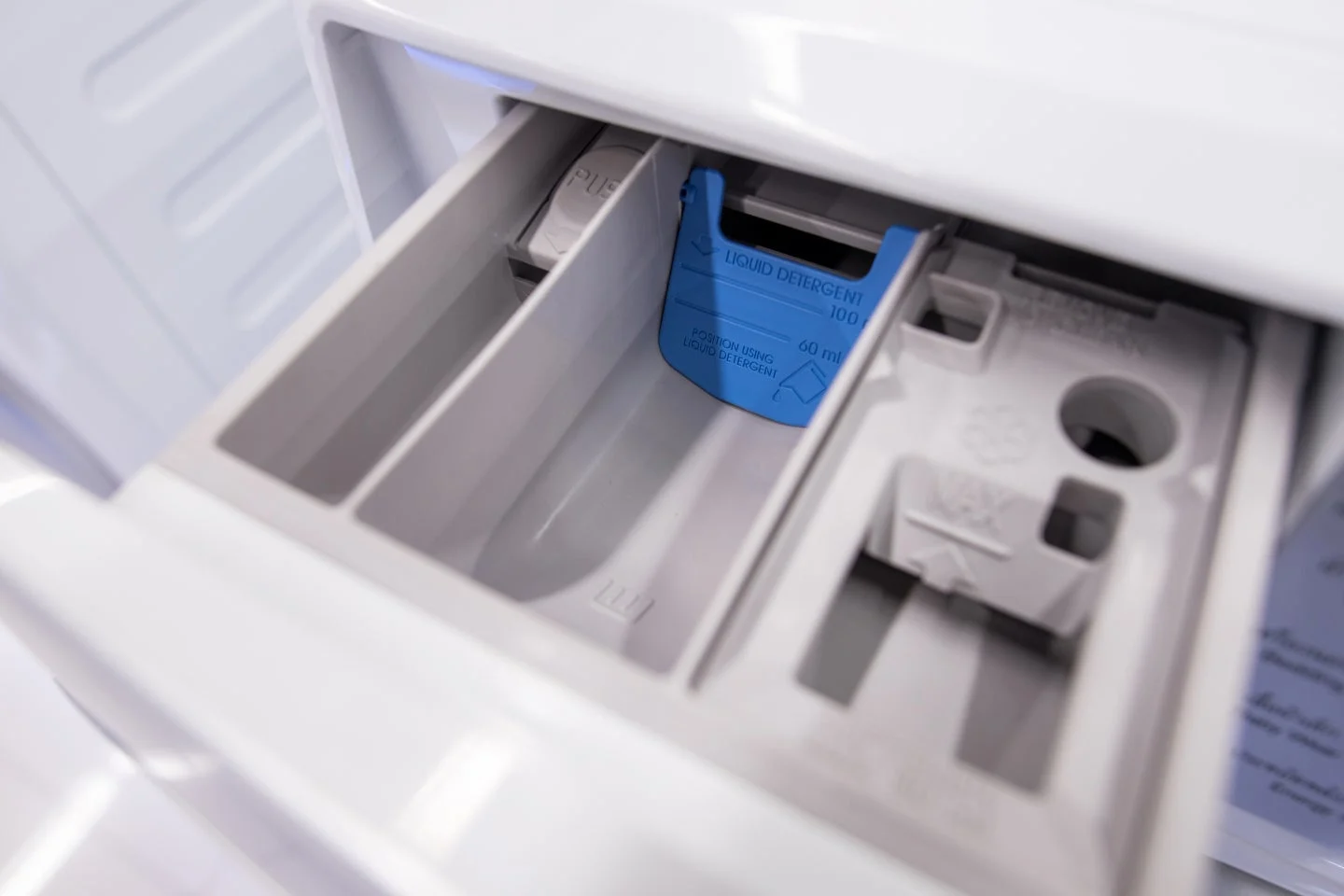
Once the cycle starts, the door is locked for your safety.
To hand wash, pretreat stains and clean visible soils, rinse to remove loose soil and fully soak each garment for 5 minutes in a solution of 1/4 cup bleach added to 1 gallon of cool water. Rinse and perform a regular wash following the laundry use directions.
For best results in a standard washer, dilute the measured amount of bleach in 1 quart of water. Add to wash 5 minutes after the wash cycle begins.
To sanitize, ensure that the laundry contacts the bleach solution for 10 minutes.
Clorox™ Disinfecting Bleach should always be used according to label directions. For standard washing machines, the recommended amount is ⅓ cup per wash load. For high-efficiency (HE) machines, use ¼ cup. These amounts are designed to deliver effective cleaning and sanitization while protecting fabrics and machine components.
If you're washing heavily soiled items — such as those with ground - in dirt, body oils or stubborn stains — consider breaking the load into smaller batches to ensure thorough cleaning. Avoid overfilling the bleach dispenser, especially in HE machines, as this can cause premature dispensing and reduce effectiveness. If your washer’s manual doesn’t specify the dispenser volume, measure it using a standard measuring cup and fill only to the max-fill line. Always follow label instructions and never exceed the recommended bleach amounts.
No, you should never use undiluted bleach directly on fabric or any surface. Full-strength bleach is highly concentrated and can cause permanent damage to fabric fibers, leading to discoloration or weakening of the material. Clorox™ Disinfecting Bleach should only be added to the bleach dispenser of your washing machine, where it is automatically diluted during the wash cycle. For standard washers, use ⅓ cup; for high-efficiency (HE) washers, use ¼ cup. Always follow label instructions and only use bleach on bleach-safe fabrics such as cotton and polyester. Pretreating stains with bleach manually is not recommended.
Scented bleach products may smell great, but they aren’t approved for sanitizing laundry. Only unscented, EPA-registered disinfecting bleach is tested to kill germs on hard, nonporous surfaces and sanitize fabrics. That said, scented bleaches are still great for everyday cleaning and laundry. They’re effective at whitening, brightening, deodorizing and cleaning household surfaces and white fabrics — plus, they leave behind a fresh scent.
Yes, but only the regular scent Splash-Less or No-Splash Bleach has sanitizing benefit. The Scented Splash-Less or No-Splash Bleach products do not disinfect or sanitize. The best way to ensure the product has disinfecting benefit is to check for the germ-kill claim on the label.
Clorox™ Splash-Less™ or No-Splash Bleach has been formulated to be thicker than regular bleach, which helps reduce splashing during pouring. Always read the label carefully to confirm whether your specific bottle is approved for sanitizing. If it is, follow the usage instructions provided on the label, as they may differ from those for traditional bleach. Using the product correctly ensures that you achieve the desired sanitizing effect without compromising safety or performance.
Yes, you can use bleach purchased from warehouse stores even if it has a different name, as long as it is an EPA-registered, unscented product. Clorox bleach is sometimes labeled differently depending on the retailer or distribution channel. Common alternate names include Clorox™ Bleach, Clorox™ Regular Bleach, Clorox™ Performance Bleach and Clorox™ Germicidal Bleach. These products typically contain the same active ingredient — sodium hypochlorite — and are formulated to meet the same performance standards. Before using any of these products for sanitizing laundry, check the label to ensure it includes an EPA registration number and a germ-kill claim. This ensures that the bleach is safe and effective for sanitizing fabrics.
