 Family of Brands
Here’s what to do if you inhale bleach fumes, get undiluted bleach on your skin or splash bleach solution in your eyes.
Bleach is widely used and effective cleaning products in the world, and at Clorox, we’ve been helping families clean and disinfect safely since 1913. While bleach is powerful, it’s also safe when used as directed. This guide can help you understand what to do if you come into contact with bleach — whether through skin contact, fumes or accidental splashes — and how to clean confidently and safely.
If you notice a bleach smell while cleaning, that can be normal — the odor often comes from a chemical reaction that happens when bleach meets organic matter (like grime). If a small amount of bleach gets on your skin, rinsing right away is usually enough. More significant contact can cause skin irritation. If bleach gets in your eyes, you may notice watering, stinging or blurry vision. If symptoms are severe or don’t improve after rinsing and getting fresh air, follow the steps below.
Diluted bleach is generally safe for skin contact. In fact, dermatologists sometimes recommend diluted bleach baths to help relieve eczema symptoms. According to the American Academy of Dermatology, a bleach bath can reduce inflammation and bacteria on the skin. Always consult your doctor before trying a bleach bath, especially if you have sensitive skin or a skin condition.
If you get bleach on your skin:
Rinse the area with cool, running water.
Then wash gently with mild soap and water. Avoid scrubbing.
Dry the area carefully.
If irritation occurs, seek medical attention.
If bleach splashes into your eyes1:
Remove contact lenses, if wearing.
Rinse with water for several minutes.
If irritation occurs, seek medical attention.
If you inhale fumes caused by bleach1:
Open a window or turn on a fan.
Leave the area.
Seek medical attention immediately if bleach is ingested or if over-exposure symptoms such as itching, rash, irritation or redness of skin or eyes persist.
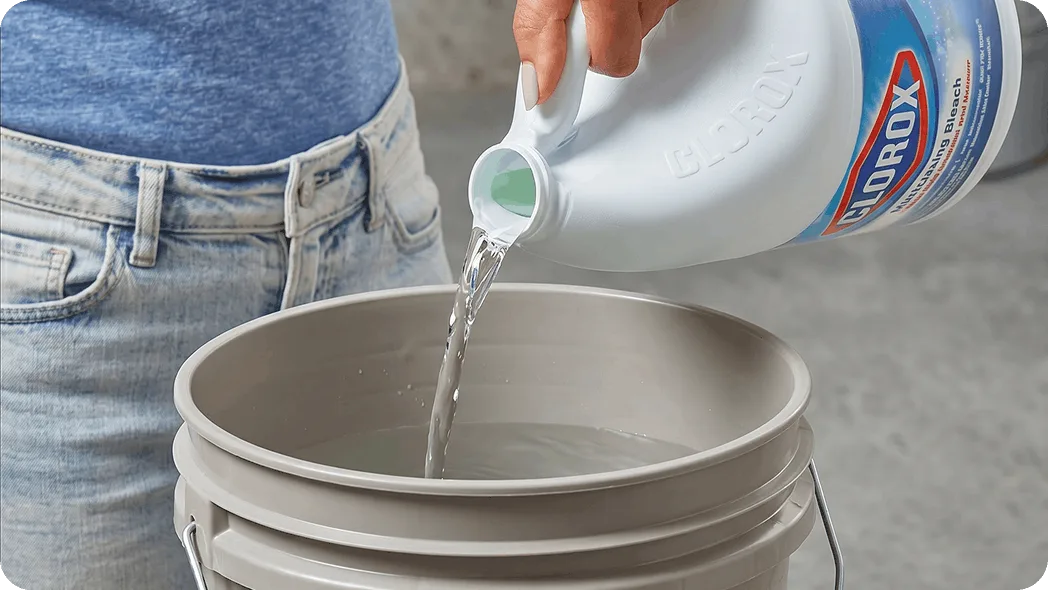
Always dilute bleach that is sold as a concentrate. Use our Bleach Dilution Ratio Chart for Disinfecting.
Ventilate your space. Open windows or use fans.
Always read product labels to ensure you are using the product safely and as directed.
Always wear gloves as directed.
As with all cleaning products, do not store bleach within reach of children or pets. Keep it in a secure, ventilated space.
Do not apply ointments or creams without rinsing thoroughly first. Reach out to a doctor or poison control center if irritation persists after rinsing, and do not apply anything to the affected area unless instructed to do so.
Do not use undiluted bleach for cleaning. Always dilute according to label instructions.
Do not mix bleach with other cleaners, including dish soap. Especially ammonia or vinegar — this can create toxic fumes. Do not use bleach to clean urine or cat little boxes as this also contains ammonia.
Do not use bleach on non-bleach-safe surfaces and fabrics. Always check labels.
You should never mix bleach with other cleaners, especially ammonia or vinegar, which can create toxic fumes.
Inhaling bleach fumes can cause:
To prevent bleach inhalation, always clean in a well-ventilated area and use fans or open windows. Never mix bleach with other cleaners. If symptoms occur, move to fresh air immediately. Seek medical help if symptoms persist.
If you start coughing:
If coughing continues or you feel dizzy, seek medical attention.
* Clorox conducted a nationally representative survey of 1,009 U.S.-based Millennial parents with children ages 6–12.