 Familia de marcas
Cómo controlar los alérgenos del hogar y prevenirlos
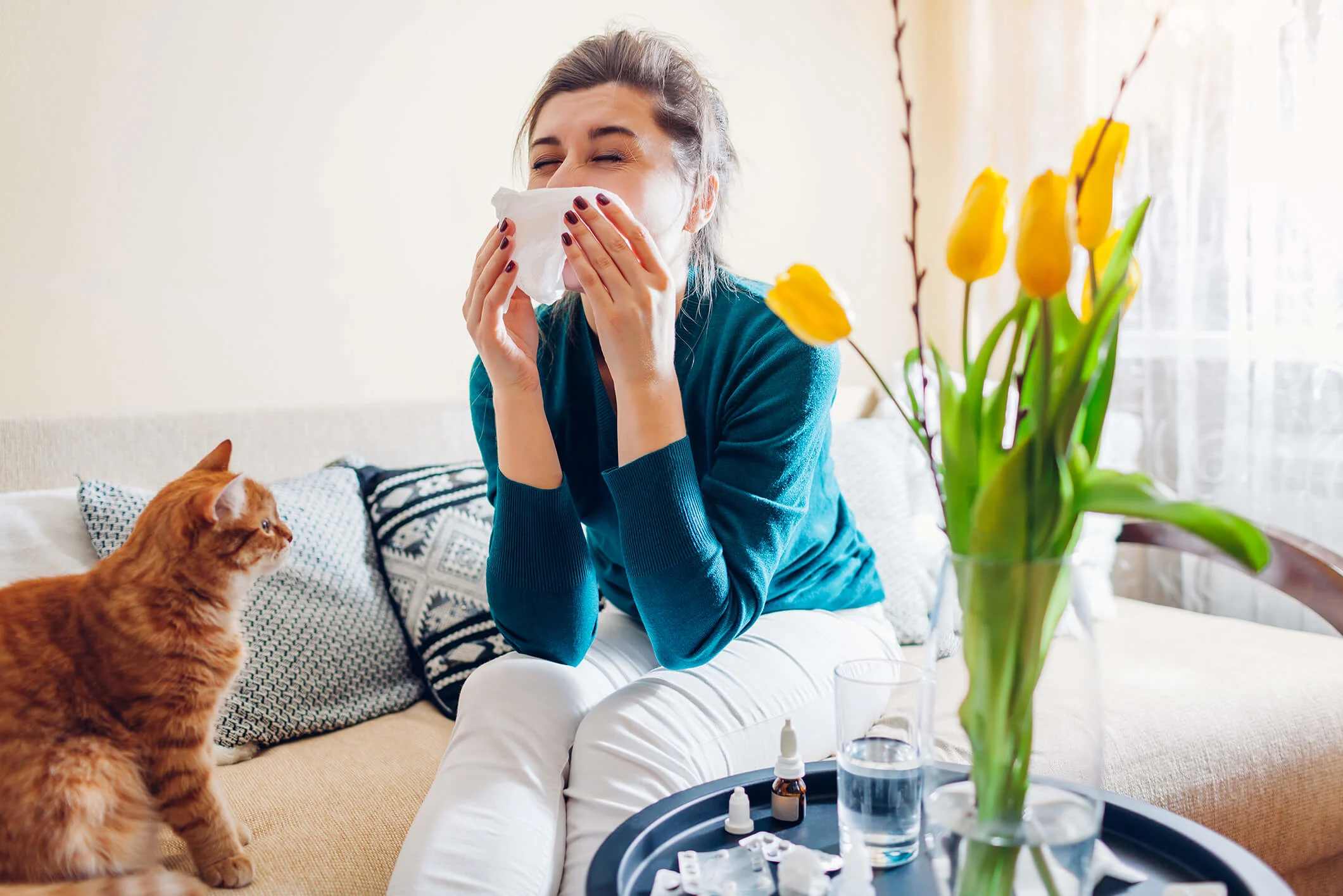
Descubre cómo los productos Clorox PURE Allergen Neutralizer sprays pueden ayudarte a neutralizar alérgenos comunes como el polen, los ácaros del polvo y la caspa de mascotas en los espacios interiores de tu hogar.
Los alérgenos son sustancias presentes en nuestro entorno que pueden causar reacciones alérgicas al entrar en contacto con ellas, convirtiéndose en una molestia en el mejor de los casos o, en algunas ocasiones, afectando gravemente nuestra salud.1 Estas reacciones pueden ser especialmente comunes en niños, personas con asma y dueños de mascotas. Aunque las alergias suelen alcanzar su punto máximo en primavera y verano debido al polen de los árboles y el césped, en el otoño e invierno son causadas por el polen de la hierba. Sin embargo, hay algunas personas que sufren de alergias durante todo el año, principalmente por alérgenos comunes en espacios interiores como los ácaros del polvo y la caspa de mascotas.
Cuando el cuerpo detecta estos alérgenos en el sistema, identifica erróneamente estas sustancias inofensivas como una amenaza y activa una defensa: estornudos, picazón en los ojos y congestión pueden ser síntomas comunes de una reacción alérgica. Comprender cómo eliminar eficazmente los alérgenos en el hogar puede ser útil para mantener un ambiente saludable durante todo el año.
Alérgenos comunes en el hogar
¿No sabes qué te está causando tantos estornudos? Estos son los culpables más probables:
- Caspa de mascotas: Los gatos, perros y otras mascotas desprenden partículas diminutas de piel conocidas como caspa, que también pueden incluir proteínas que se encuentran en su saliva, orina y heces.
- Polen: A menudo entra a la casa desde el exterior a través de las mascotas, la ropa o los zapatos. La cantidad de polen de árboles y césped puede ser especialmente alta en primavera.
- Restos de ácaros del polvo: Alérgenos producidos por criaturas microscópicas, comúnmente encontradas en la ropa de cama, los muebles y las alfombras.
- Moho y hongos: El moho y los hongos crecen en áreas húmedas como baños y sótanos, lo que puede contribuir a las alergias en espacios interiores.
- Excrementos de cucarachas: Aunque suelen estar ocultos, estos desechos pueden ser un alérgeno serio que afecta a muchas personas.
No importa de qué tipo de alérgeno se trate, Clorox te ofrece una variedad de productos que te ayudarán a controlar los alérgenos en superficies duras y blandas de la casa. Sigue nuestra guía para eliminarlos en cada habitación de tu hogar.
Lo que vas a necesitar
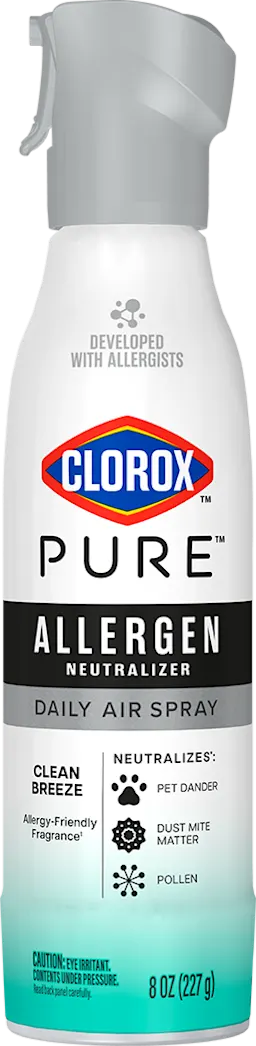
Clorox™ PURE™ Allergen Neutralizer Daily Air Spray
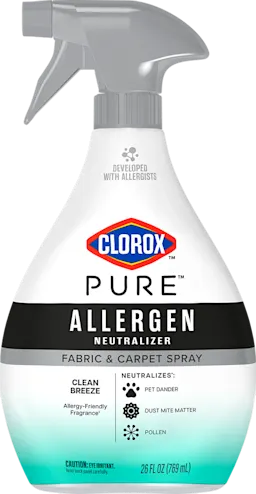
Clorox™ PURE™ Allergen Neutralizer Fabric & Carpet Spray
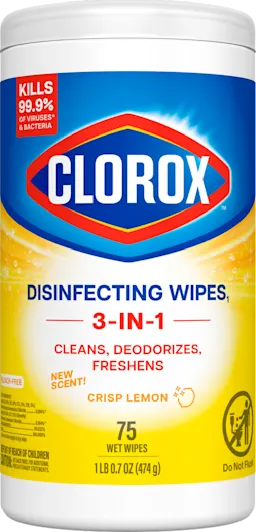
Clorox™ Disinfecting Cleaning Wipes₁
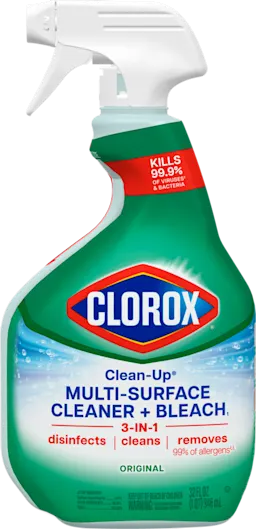
Clorox™ Clean-Up™ Cleaner + Bleach Spray & Mold Remover
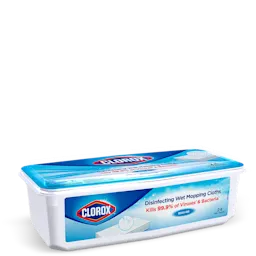
Clorox™ Disinfecting Wet Mopping Cloths

Toallas de papel
Pañito
Pasos para eliminar los alérgenos de la casa
Sala
Empieza por darle una buena limpieza a tus espacios con Clorox PURE Allergen Neutralizer Daily Air Spray para neutralizar los alérgenos antes de que se conviertan en alergias.*
ConsejoPara obtener mejores resultados, rocía dos veces al día (una en la mañana y otra en la noche) las habitaciones que más usas.
Dormitorio
Utiliza Clorox PURE Allergen Neutralizer Fabric & Carpet Spray en superficies blandas como la ropa de cama y las alfombras para neutralizar el polen no viable, los restos de ácaros del polvo y la caspa de mascotas.
Artículos de mascotas
Los perros y gatos son otro factor que influye en la lucha contra los alérgenos. Los productos Clorox PURE Allergen Neutralizer Daily Air Spray y Fabric & Carpet Spray son excelentes para neutralizar la caspa de mascotas. También tenemos algunos consejos de limpieza y cuidado para los dueños de perros y de gatos que te ayudarán a minimizar el impacto de las mascotas en tus alergias.
Telas
Considera lavar con frecuencia tu ropa de cama y vestimenta, ya que estos materiales blandos pueden atrapar alérgenos. Te recomendamos agregar Clorox PURE Allergen Neutralizer Fabric & Carpet Spray a tu rutina diaria.
Cocina y Baño
Limpia los mostradores y otras superficies duras y no porosas, prestando especial atención a los lugares que tienen contacto con el exterior como los bordes de las ventanas y las puertas. Las toallitas desinfectantes Clorox™ Disinfecting Wipes son seguras para limpiar madera con acabado, granito sellado y acero inoxidable.
Consejos para ayudar a controlar los alérgenos en casa
Aunque los alérgenos son inevitables y pueden ser difíciles de controlar, una rutina de limpieza puede ser muy útil. Limpiar, aspirar y desempolvar regularmente te ayudarán a reducir la cantidad de polvo y caspa de mascotas en las superficies. Además, el uso diario de Clorox PURE Allergen Neutralizer sprays es una excelente manera de ayudar a neutralizar los alérgenos antes de que se conviertan en alergias.* Recuerda, el control de alérgenos es importante todo el año, no solo durante la temporada de polen.
Controlar los niveles de humedad en los espacios interiores también puede ayudarte a reducir los alérgenos, ya que los restos de ácaros del polvo y el moho prosperan en ambientes húmedos. Mantener ventanas y puertas cerradas, especialmente durante la temporada alta de polen, puede ayudarte a evitar que los alérgenos del exterior entren a tu hogar. Además, incorporar purificadores de aire naturales, como ciertas plantas, puede ayudarte a mejorar la calidad del aire interior y reducir los alérgenos.
Herramientas para tu rutina de control de alergias
Desarrollados junto con alergólogos, los productos Clorox PURE Allergen Neutralizer Daily Air Spray y Clorox PURE Allergen Neutralizer Fabric & Carpet Spray ayudan a neutralizar los alérgenos comunes, incluyendo el polen no viable, los restos de ácaros del polvo y la caspa de mascotas.
Las toallitas Clorox Disinfecting Wipes y los paños húmedos para pisos Clorox Disinfecting Wet Mopping Cloths eliminan el 99% de los alérgenos en superficies duras no porosas. Estas toallitas pueden ayudar a eliminar alérgenos comunes como la caspa de mascotas, los restos de ácaros del polvo y los excrementos de cucarachas.
Para la prevención y eliminación de alergias, considera usar purificadores de aire con filtros True HEPA, aspiradoras con filtro HEPA, así como pintura de pared y limpiadores resistentes al moho. Los purificadores de aire equipados con filtros True HEPA pueden capturar hasta el 99.97% de las partículas en el aire tan pequeñas como 0.3 micrones, incluyendo polvo, polen, caspa de mascotas y esporas de moho, lo cual mejora significativamente la calidad del aire interior2.
Las aspiradoras con filtro HEPA están diseñadas para atrapar alérgenos durante la limpieza, evitando que se liberen nuevamente al aire. Estas aspiradoras pueden ser particularmente efectivas para eliminar restos de ácaros del polvo, caspa de mascotas y otras partículas finas de alfombras y tapicería.
Preguntas frecuentes
- ¿Los ventiladores de techo empeoran las alergias?
Los ventiladores de techo pueden agravar las alergias si no reciben el mantenimiento adecuado. Las aspas acumulan polvo con el tiempo y, al encenderse, dispersan partículas por el aire. Además, pueden levantar el polvo acumulado en las superficies, desencadenando los síntomas de las alergias. Para ayudar a reducir este efecto te recomendamos limpiar las aspas del ventilador con regularidad.
- ¿El moho causa alergias?
Es posible ser alérgico al moho. Esto puede provocar una reacción alérgica a las esporas de moho presentes en el aire, de forma similar al polen u otros alérgenos transportados por el aire. Cuando las esporas de moho se liberan y entran al organismo por la nariz o la boca, el cuerpo puede percibirlas como una amenaza y generar una respuesta inmunológica que podría causar estornudos, picazón de garganta u otros síntomas comunes de alergias.
- ¿Es posible tener alergias en invierno?
Aunque el invierno puede ser una estación mucho más suave que la primavera en cuanto a niveles de polen, algunos alérgenos persisten durante todo el año. Las alergias durante la época de frío tienen más probabilidades de desencadenarse por alérgenos en espacios interiores, como esporas de moho, hongos, ácaros del polvo y caspa de mascotas. Además, pasar más tiempo en interiores puede desencadenar síntomas de alergia, ya que podrías pasar más tiempo en contacto cercano con tus mascotas o tu sistema de calefacción podría circular más polvo en tu hogar que en otras épocas del año.3
De hecho, según el Dr. Michael O’Connell, alergólogo certificado, algunas señales de que podrías ser alérgico a algo en tu casa son el aumento de los síntomas de alergia cuando pasas más tiempo en casa y síntomas que ocurren a diario y con más frecuencia en los meses de invierno, cuando las personas están más tiempo en interiores.
- ¿Por qué tengo alergias y estornudo dentro de mi casa?
Hay varios desencadenantes comunes de alergias que pueden venir del interior de la casa. Según el Dr. Michael O’Connell, “los alérgenos en espacios interiores están suspendidos en el aire, por lo que las técnicas de limpieza doméstica estándar no siempre funcionan para reducir la exposición a esos alérgenos tanto como podrías pensar”. Por eso Clorox PURE fue diseñado científicamente para atacar e inactivar los alérgenos en el aire presentes en polen no viable, restos de ácaros del polvo y caspa de mascotas que pueden desencadenar reacciones alérgicas en tu cuerpo.
- *
Neutraliza polen no viable, restos de ácaros del polvo y caspa de mascotas al entrar en contacto con el spray, cuando se usa según las indicaciones.
- 1.
www.cdc.gov/climate-health/php/effects/allergens-and-pollen.html (solo disponible en inglés).
- 2.
https://www.consumerreports.org/air-purifiers/what-can-an-air-purifier-catch/ (solo disponible en inglés).
- 3.
https://www.mayoclinichealthsystem.org/hometown-health/speaking-of-health/is-it-an-allergy-or-the-common-cold (solo disponible en inglés).