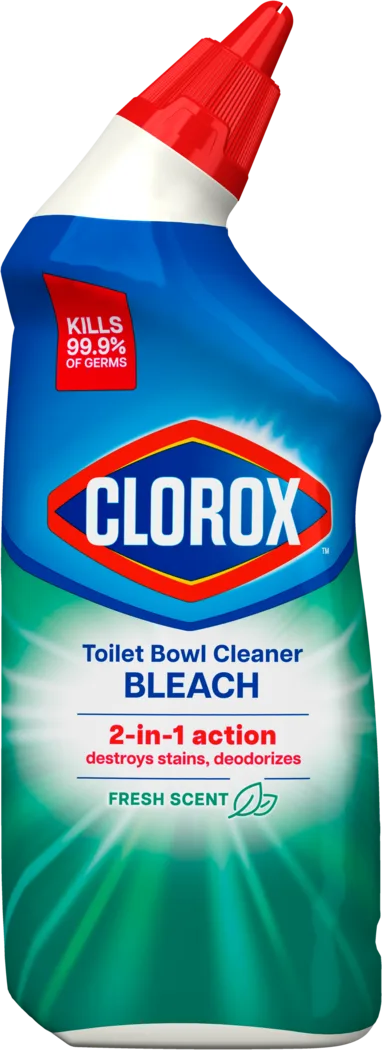
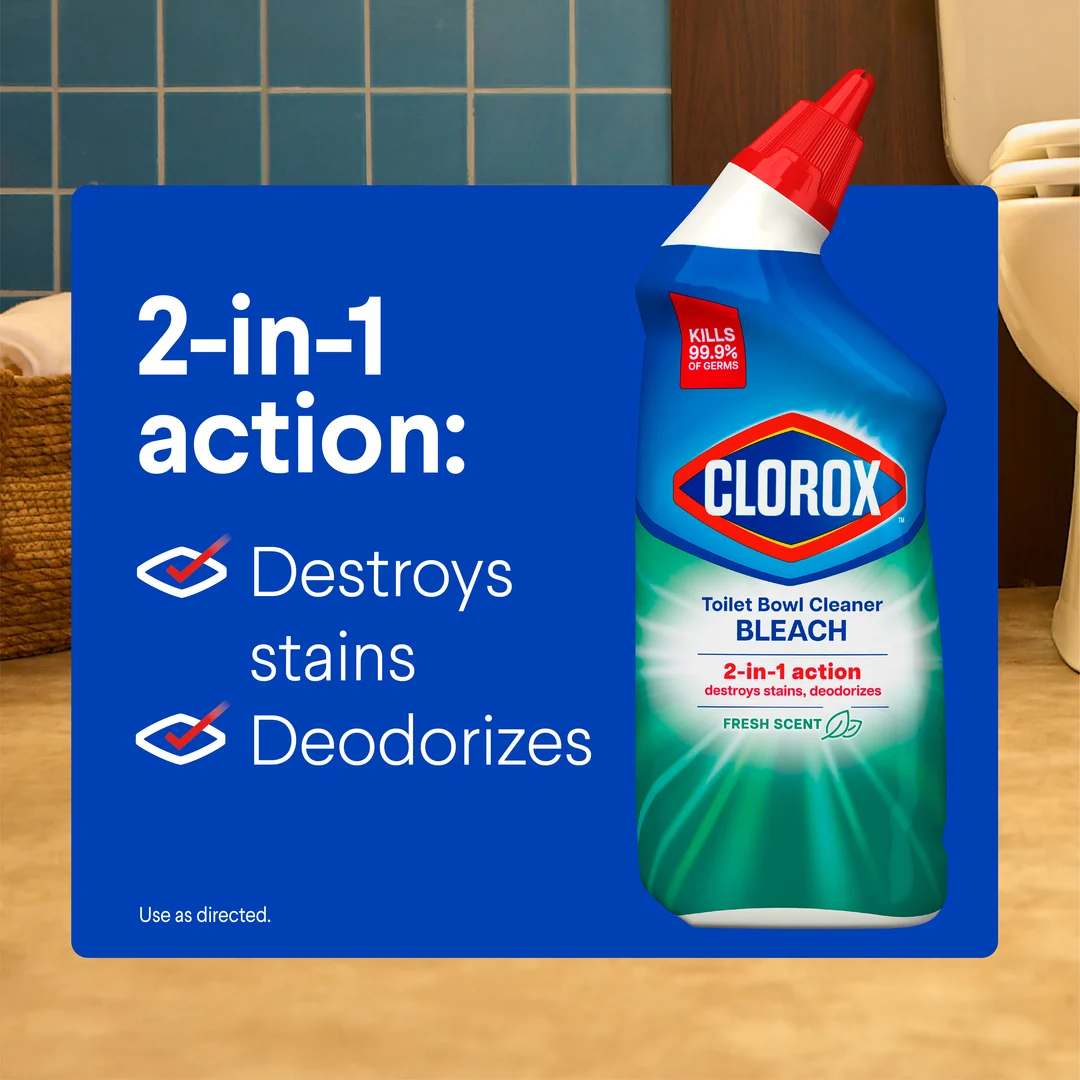
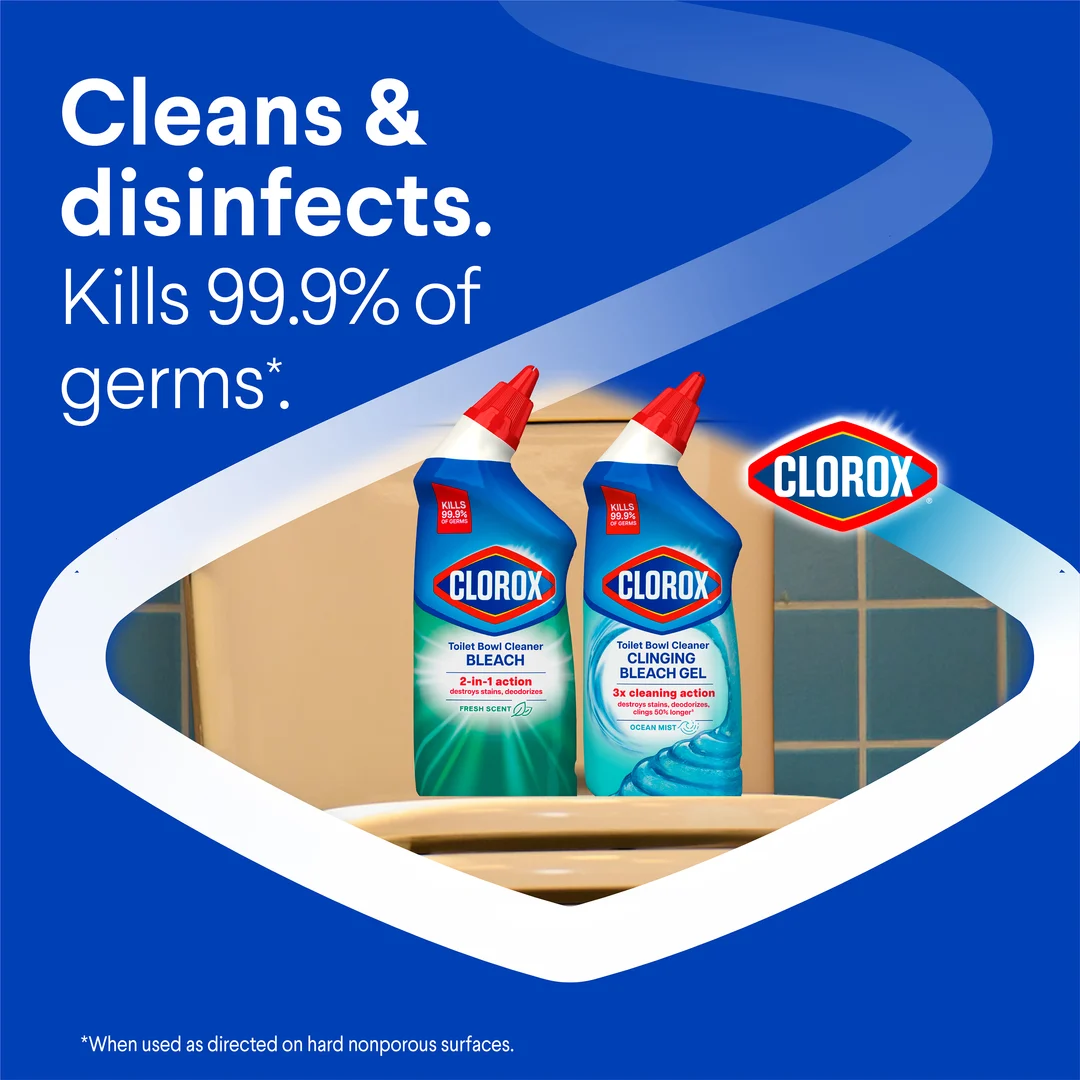
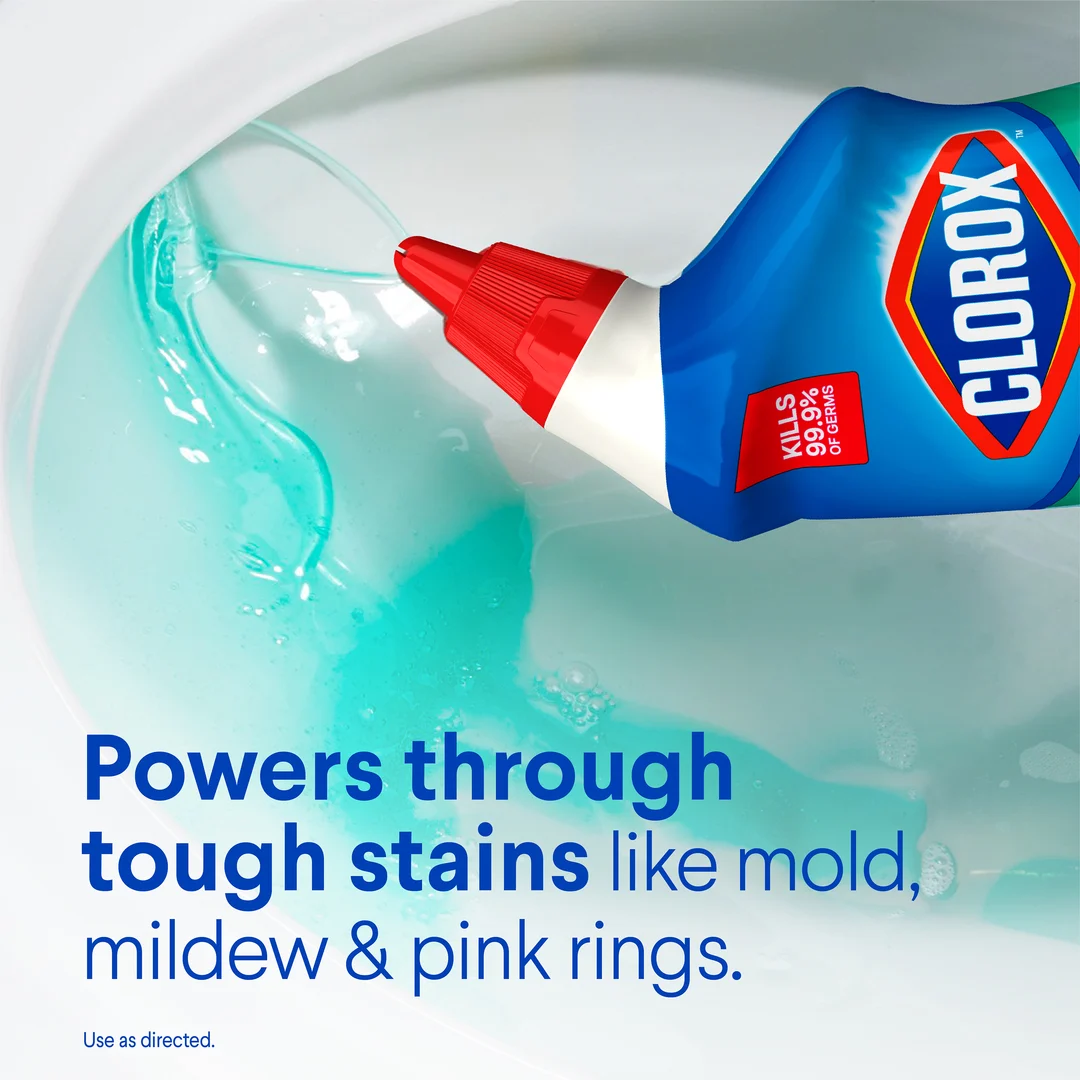
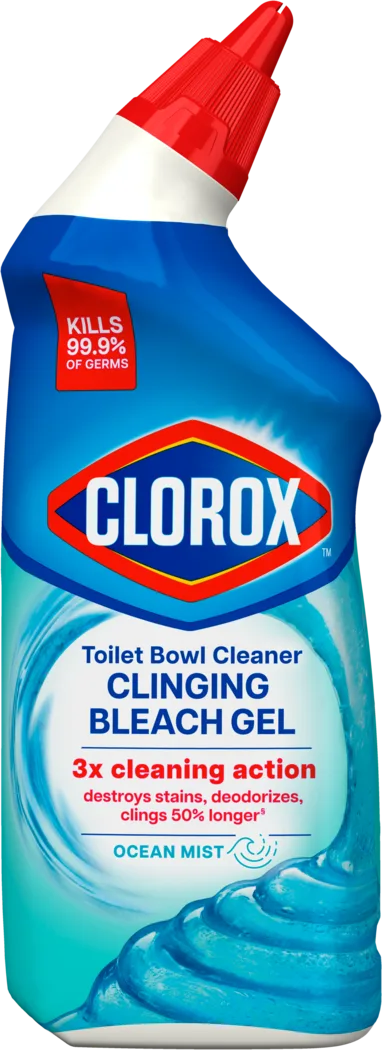
The only toilet bowl cleaners with Clorox® Bleach.
Where to Buy
Ingredients that make up one percent or more of the contents of a product by weight are listed in descending order of concentration. Those that make up less than one percent — like fragrances, dyes, and preservatives — are listed in alphabetical order.
Water, also sometimes listed on product labels as aqua, is the most widely used of all solvents. It is a colorless, odorless and flavorless liquid and serves as the base of many cleaning products.
Sodium hypochlorite, the active ingredient in household bleach, helps to whiten, brighten and remove dirt and stains from surfaces and fabrics. Sodium hypochlorite-based bleach is effective in killing 99.9 percent of bacteria, viruses and some types of mold. Sodium hypochlorite is made by a process that is based on combining ingredients from electrolyzed salt water. In normal use, a virtual salt-to-salt cycle is achieved: about 95 percent to 98 percent of household bleach quickly breaks down to salt and water, and the remainder is effectively treated by sewer or septic systems (not contaminating ground water).
Coconut fatty acid amides are surfactants added to detergents to stabilize foam and thicken the product.
Dyes are sometimes used to add color to cleaning products. They can be made from both synthetic and natural materials.
Fragrances and perfumes are mixtures of fragrant essential oils, aroma compounds, fixatives and solvents. They are used in cleaning products to add a particular scent (lavender, lemon, etc.) to clothes and homes, and to mask unpleasant odors.
Lauramine oxide is used in laundry and other cleaning products as a primary cleaner, foam enhancer, stabilizer and thickener.
Myristamine oxide is a surfactant or cleaning agent that is used in cleaning products for its ability to thicken the liquid and stabilize foam.
Potassium iodide is a type of salt, which among other uses, is added to table salt as a nutritional supplement. In small quantities it can be used as a stabilizer for sodium hypochlorite-based bleach products.
Preservatives are used to help prevent products from deteriorating over time, maximizing their shelf life and ensuring efficacy and safety. They work by inhibiting growth of bacteria or mold, or by absorbing oxygen that can oxidize ingredients.
Sodium hydroxide, also known as caustic soda or lye, is used as a pH adjuster in cleaning products. As an alkali, it is useful in cleaning products for removing soils that are fatty, oily or acidic.
Note: Product ingredients are listed based on the most current information available. Please check back periodically for formulation updates. If you have questions regarding a product or the ingredient listing for a product, please contact us for more information.
The MSDS provides information on proper and safe handling of our products in occupational environments.*
*These MSDS are not applicable to consumer use of our products. We thoroughly evaluate the safety aspects of all of our consumer products prior to their use in the home and provide all necessary and applicable safety information (including use precautions, health effects and first aid procedures) on product labels.
At Clorox, the safety of you, your family, pets and the environment is a top priority. That’s why our experts evaluate a product’s safety before it makes it to store shelves. So when you bring home a Clorox product, you can be assured that the testing we’ve done helps provide you with accurate instructions, warnings and first-aid statements to ensure it is safe when used as directed.
Before using any cleaning or laundry product, always read the label. The label is more than just a resource for usage; it is your guide for safe and effective use.
Clorox 2® Stain Fighter & Color Booster works to fight stains and keep your colors bright.
Clean and disinfect your toilet bowls with the power of Clorox® Toilet Bowl Cleaner — with Bleach.
(8)
It’s free and you’ll get all our latest offers, tips and news.
* WHILE SUPPLIES LAST. View Offers for full details.